
Checklist for Crane Certification Compliance
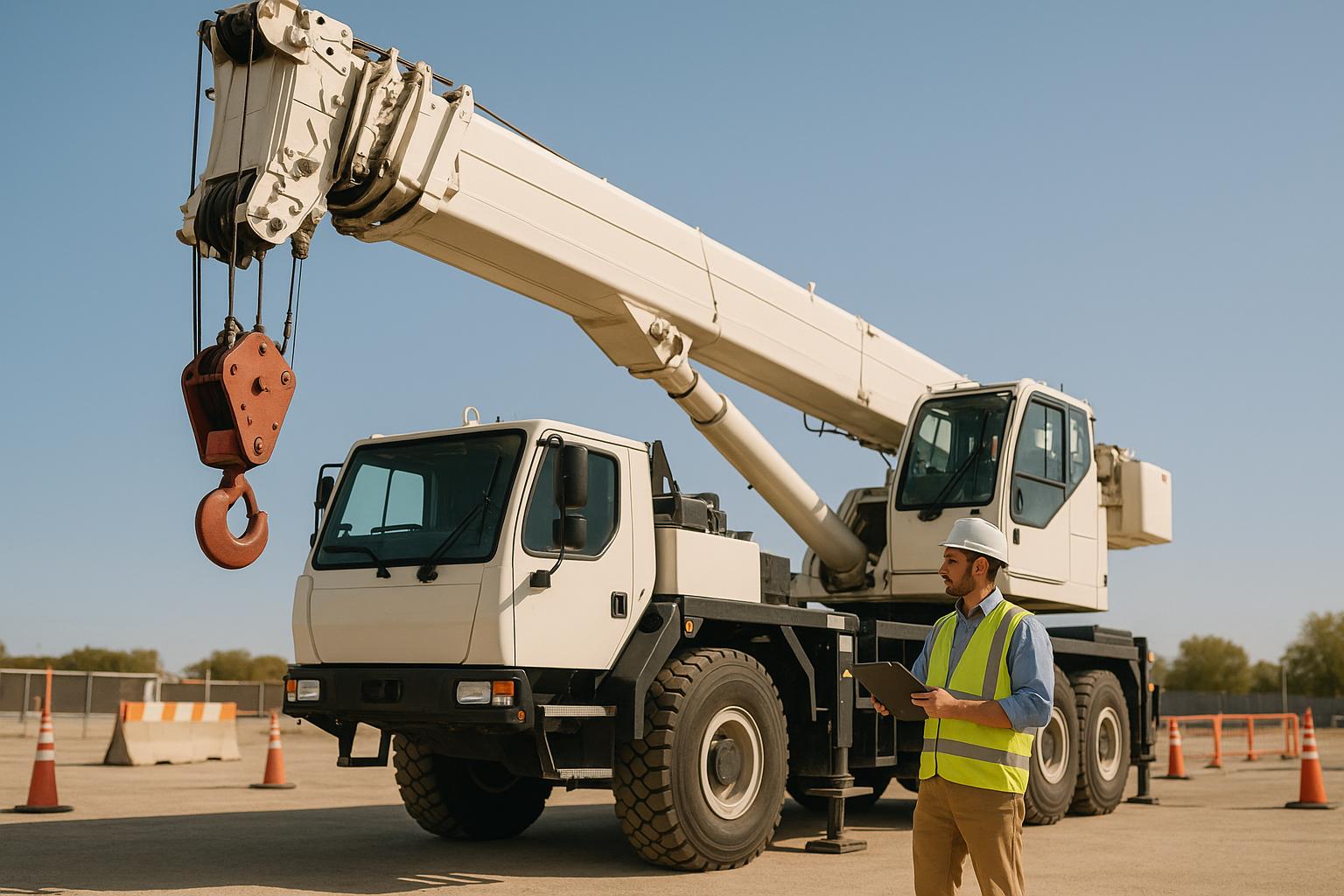
Crane certification compliance is essential for safe, legal, and efficient crane operations. Failure to comply can result in OSHA fines, project delays, and legal liabilities. Compliance ensures safety, reduces downtime, and enhances operational reliability. Here's what you need to know:
- Regulatory Bodies: OSHA enforces crane safety rules, with standards like 1926.1400 for construction and 1910.179 for general industry. ASME provides additional technical standards.
- Operator Certification: Operators must pass written and practical exams from accredited organizations like NCCCO. Certification is valid for five years.
- Equipment Inspections: Daily, monthly, and annual inspections are required. Records must be kept for 3 to 12 months, depending on the inspection type.
- Documentation: Maintain up-to-date operator certifications, inspection logs, and maintenance records to ensure compliance.
- Crane Types: Different rules apply to mobile, tower, overhead, gantry, and articulating boom cranes, each with specific inspection and certification needs.
- Third-Party Audits: Regular internal audits and preparation for external audits are key to avoiding penalties.
Partnering with regional service providers like TDS Erectors & Crane Service can simplify compliance by offering certified personnel, inspection management, and training programs. Investing in proper training, inspections, and documentation not only meets legal requirements but also promotes safety and efficiency in crane operations.
Crane Inspections: OSHA Requirements & Safety Tips for Construction
Regulatory Requirements
Navigating the regulatory framework is essential for staying compliant with crane certification rules. Federal agencies and industry organizations set the safety standards that protect workers and ensure safe operations. Below, we break down the key standards, crane types, and certification distinctions you need to know.
Standards and Regulatory Bodies
The Occupational Safety and Health Administration (OSHA) is the main federal authority overseeing crane safety regulations. For construction projects, OSHA’s 1926.1400 series lays out detailed requirements, covering everything from equipment inspections to operator certification and safe operational practices.
In general industry, OSHA 1910.179 governs overhead and gantry cranes, requiring daily visual checks and monthly documented inspections. Annual inspection records must be kept for 12 months, while monthly inspection records need to be retained for three months.
The American Society of Mechanical Engineers (ASME) offers supplementary technical standards to OSHA regulations. For example:
- ASME B30.5 focuses on mobile and locomotive cranes.
- ASME B30.3 addresses tower cranes.
- ASME B30.22 pertains to articulating boom cranes.
These standards provide detailed guidance on crane design, maintenance, inspection, and operation.
Operator certification is another critical component. The National Commission for the Certification of Crane Operators (NCCCO) offers programs that meet OSHA’s requirements. As of 2025, TDS Erectors & Crane Service provides NCCCO and NCCER-certified programs, combining hands-on training with safety instruction, boasting a 95% crew pass rate.
Each crane type presents unique challenges and requires specific compliance measures to meet these regulatory standards.
Crane Types Covered
Different crane types fall under specific rules based on their design and use. Here’s a closer look at the main categories:
- Mobile Cranes: Governed by OSHA 1926.1400 and ASME B30.5, these cranes require certified operators and inspections tailored to their mobility and exposure to changing site conditions.
- Tower Cranes: Falling under OSHA 1926.1400 and ASME B30.3, these cranes have additional requirements for stability checks and assembly procedures due to their height and structural complexity.
- Overhead and Gantry Cranes: Regulated by OSHA 1910.179, these cranes need daily visual inspections and monthly documented checks, focusing on runway conditions, electrical systems, and load-handling devices.
- Articulating Boom Cranes: Covered by OSHA 1926.1400 and ASME B30.22, these cranes require specialized operator training due to their hydraulic systems and multiple articulation points.
| Crane Type | Primary OSHA Standard | ASME Standard | Key Requirements |
|---|---|---|---|
| Mobile Cranes | 1926.1400 | B30.5 | Certified operators; daily and annual inspections |
| Tower Cranes | 1926.1400 | B30.3 | Stability checks; assembly inspections |
| Overhead/Gantry | 1910.179 | - | Daily visual and monthly documented inspections |
| Articulating Boom | 1926.1400 | B30.22 | Operator training; hydraulic system checks |
Operator vs. Equipment Certification
Understanding the distinction between operator and equipment certification is key to meeting compliance standards.
- Operator Certification: This ensures individuals are trained and tested to operate cranes safely. Accredited organizations like NCCCO administer written and practical exams that cover topics such as load calculations, rigging techniques, safety procedures, and equipment limitations. Certification is valid for five years, and operators must keep their certification documents on-site for inspections.
-
Equipment Inspections: These focus on the crane itself, ensuring it is safe to operate. Inspections are carried out by qualified personnel and include:
- Daily shift inspections
- Documented monthly checks
- Detailed annual reviews
Each inspection level requires thorough documentation, including findings, corrective actions, and inspector qualifications.
"Our team is highly skilled, experienced, and OSHA-certified. To maintain our levels of safety, we make continual training available to our team and subject our fleet to regular safety checks and maintenance."
– TDS Erectors & Crane Service
Both operator certification and equipment inspections are essential for creating a robust safety framework. Organizations must ensure that certified operators are paired with properly inspected equipment, and all documentation must be kept up-to-date to meet compliance standards.
Required Documentation Checklist
Having the right documentation in place is critical for crane certification compliance. Without it, you could face serious regulatory headaches. This checklist is designed to help you keep all necessary paperwork organized and ready for inspections.
Operator and Personnel Certifications
Keeping accurate certification records for your team is a must to meet compliance standards. For crane operators, certification should align with OSHA 29 CFR 1926.1427. Recognized certifications, such as those from NCCCO or NCCER, are required and typically need renewal every five years. Be sure to confirm the renewal timeline with the certifying organization.
Signal persons and riggers also need proof of their qualifications. This includes documentation of their training, such as the name of the individual, certification details, issuing authority, and the issue and expiration dates. It's a good idea to maintain copies of operator certifications, signal person records, and training certificates to ensure you're prepared for inspections.
TDS Erectors & Crane Service offers NCCCO and NCCER-certified programs, blending hands-on training with detailed safety instruction.
Key documents to keep on hand include:
- Current operator certification cards or licenses
- Signal person qualification records
- Rigger training and evaluation documentation
- Continuing education certificates
Inspection and Maintenance Records
Inspection documentation requirements depend on the type and frequency of inspections. For daily shift inspections, records are only needed if issues are identified. Monthly inspections, however, must always be documented, and these records should be kept for at least three months.
Annual inspections require the most detailed records, which must be retained for a minimum of 12 months. Each record should include the date of inspection, the items reviewed, any findings, corrective actions taken, and the name and signature of the qualified inspector.
Maintenance logs are equally important. These should track repairs, replacements, and routine servicing, and must be kept as long as the equipment is in use.
| Document Type | Retention Period | Format Recommendation | Responsible Party |
|---|---|---|---|
| Shift Inspection Records | Only if deficiencies found | Digital or paper | Competent Person |
| Monthly Inspection Records | 3 months | Digital & paper | Competent Person |
| Annual Inspection Records | 12 months | Digital & paper | Qualified Person |
| Maintenance Logs | As long as equipment is in use | Digital & paper | Maintenance Supervisor |
Essential documents for inspections and maintenance include:
- Daily shift inspection checklists (if deficiencies are found)
- Monthly inspection reports
- Comprehensive annual inspection records
- Maintenance and repair logs
- Third-party audit reports
- Initial inspection records (before first use or after significant modifications)
- Rated load test documentation
Keeping these records updated and organized is crucial, as detailed further in the next section on document retention and format.
Documentation Retention and Format
Effective document management is key to staying compliant. OSHA allows for both digital and paper formats, but digital records are often more practical. They make it easier to access, back up, and retrieve information quickly during audits. Plus, digital systems can send automated reminders for renewals and inspections, helping you avoid missed deadlines.
That said, paper records still have their place, especially as backups or in field locations where digital access may be limited. OSHA also requires that operator manuals and load charts be available in the crane cab, written in a language the operator understands.
For best results, use a centralized digital system with cloud backup, standardized templates, and controlled access. Keep paper copies on-site for field use. Assigning a compliance officer or team to oversee document management can help ensure everything stays organized and up-to-date.
Operator and personnel certification records should be kept for the duration of employment and for a period after separation, as determined by company policy or local regulations. All records should be secure, well-organized, and accessible only to authorized personnel.
Failing to maintain proper documentation can lead to OSHA citations, fines, work stoppages, and increased liability if an accident occurs. By investing in a solid documentation system, you not only meet regulatory requirements but also improve overall operational efficiency.
Inspection and Audit Processes
Keeping up with inspection and audit requirements is a key part of ensuring crane certification stays on track. These processes are not just about compliance - they're about maintaining safety and operational reliability.
Inspection Frequency and Scope
OSHA 1926.1412 outlines four key inspection types that every crane operation must adhere to: shift inspections, monthly inspections, annual inspections, and post-modification inspections. Each comes with specific guidelines and documentation requirements.
Shift inspections are performed by a competent person at the start or during each shift. These checks focus on the basics - visual assessments of controls, rigging, safety devices, and operating mechanisms for any obvious issues or misalignments. Emergency stop buttons and cut-off switches must also be confirmed as functional and easily accessible before work begins. Documentation is only required for any deficiencies found.
Monthly inspections go a step further, requiring written records that need to be kept for at least three months. These inspections cover a broader range, including hydraulic systems, hooks, chains, ropes, and safety devices. Specific attention is given to hydraulic lines for leaks, hooks for deformation, and wire ropes for wear or fraying.
Annual inspections are more thorough and must be conducted by a qualified person at least once every 12 months. These inspections often include load testing and detailed assessments of all major components, with documentation retained for at least a year.
The scope of inspections also involves checking that warning labels and placards are clear and legible. Electrical systems should be inspected for secure wiring, corrosion-free components, proper grounding, and functional emergency cut-off switches. Control systems need to be examined for smooth operation, responsive controls, and properly functioning safety interlocks and limit switches.
| Inspection Type | Frequency | Performed By |
|---|---|---|
| Shift Inspection | Each shift | Competent person |
| Monthly Inspection | Monthly | Competent person |
| Annual Inspection | At least every 12 months | Qualified person |
| Post-Modification Inspection | After modifications affecting safety | Qualified person |
Maintaining detailed inspection records is just as important as the inspections themselves, ensuring smooth compliance and operational safety.
Inspector Qualifications
Understanding the distinction between a competent person and a qualified person is essential. A competent person is someone designated by the employer, knowledgeable about crane components, and capable of identifying and addressing hazards. They handle daily and monthly inspections, ensuring any issues are promptly resolved.
A qualified person, on the other hand, has specialized training or experience to handle more complex tasks, such as load testing, structural analysis, or certifying inspection records. These individuals perform annual inspections, evaluate modifications that could impact safety, and oversee inspections after repairs. For crane operator inspectors, at least 2,000 hours of field experience is required to qualify.
In most cases, competent persons manage routine inspections, while qualified persons take on tasks requiring deeper expertise, such as annual assessments or post-repair inspections.
At TDS Erectors & Crane Service, the team undergoes rigorous training in health and safety protocols, ensuring compliance with OSHA standards through both qualification and continuous education.
Preparing for Third-Party Audits
Once inspections are routine and personnel are certified, the next step is audit readiness. Preparing for third-party audits involves systematic organization and proactive internal reviews. Companies should use OSHA checklists to conduct internal audits, review inspection and maintenance records, and confirm that all certifications are current.
Key documents, such as operator certifications and load test records, should be easily accessible. Auditors generally request the last three months of inspection records, proof of operator certifications, and evidence of corrective actions taken for identified issues.
A successful audit process includes a clear scope, a checklist aligned with OSHA standards, a review of documentation, interviews with operators and inspectors, and on-site observations of crane operations. Internal audits are crucial for spotting compliance gaps before an external audit, ensuring all procedures and records are up to date.
Additional preparation steps include verifying that load charts and manuals match the crane's serial number, confirming that fire extinguishers are accessible and operable at operator stations, and ensuring all warning systems and safety devices are fully functional. Preventive maintenance programs should also adhere to manufacturer recommendations.
For organizations operating across multiple states, maintaining a compliance checklist that includes both federal and state requirements is essential. Processes should be updated as regulations evolve, and consulting with legal or safety experts can help ensure alignment with all applicable rules.
Failure to comply with OSHA standards can lead to citations, fines, work stoppages, and increased risks of accidents or injuries. By conducting regular internal audits and keeping meticulous records, companies can significantly reduce the likelihood of citations during OSHA inspections, protecting both safety and business operations.
sbb-itb-6be7c12
Operator and Personnel Compliance
After establishing a solid regulatory foundation, the next critical step in crane operation is ensuring that personnel are properly certified. Even with thorough equipment inspections and detailed documentation, unqualified operators, signal persons, or riggers can lead to accidents or violations.
Operator Certification Standards
According to OSHA regulation 29 CFR 1926.1427, all construction crane operators must be certified by an accredited organization. This certification process includes written exams - covering safety, operational procedures, and regulations - and practical demonstrations of safe operation. Operators must also recertify every five years. The National Commission for the Certification of Crane Operators (NCCCO) is widely regarded as the industry standard for accreditation.
TDS Erectors & Crane Service offers programs certified by NCCCO and NCCER, featuring hands-on training and safety instruction. These programs boast an impressive 95% pass rate for participants. Failing to use certified operators can result in OSHA penalties, work stoppages, and increased liability risks [7].
In addition to operator certification, roles like signal persons and riggers also carry strict qualification requirements.
Signal Person and Rigger Qualifications
Signal persons must demonstrate their expertise through either a third-party evaluation or employer assessment. This includes proficiency in hand and voice signals, understanding crane limitations, and identifying site hazards. Similarly, riggers must be qualified in areas like estimating load weights, selecting appropriate rigging hardware, and ensuring proper attachment methods. Employers are responsible for verifying these qualifications through observation, interviews, and documentation reviews.
TDS Erectors & Crane Service also provides NCCCO and NCCER-certified rigging programs. These programs combine practical instruction with real-world testing, helping crews build the skills necessary for safe lifting operations.
| Requirement | Frequency/Validity | Responsible Party | Documentation Needed |
|---|---|---|---|
| Operator Certification | Every 5 years | Operator/Employer | Certification records |
| Signal Person Qualification | Before assignment | Employer | Training/qualification docs |
| Rigger Qualification | Before assignment | Employer | Training/qualification docs |
| Refresher Training | As needed/periodic | Employer | Training records |
Keeping these certifications up to date requires ongoing training and education.
Training and Continuing Education
Regular training ensures that operators, signal persons, and riggers stay informed about the latest safety standards, new equipment, and regulatory updates. This includes refresher courses, safety meetings, hands-on practice, and manufacturer-specific training. Digital tools like automated reminders and record-keeping systems can help manage certification expirations and ensure timely renewals.
"Our team is highly skilled, experienced, and OSHA-certified. To maintain our levels of safety, we make continual training available to our team and subject our fleet to regular safety checks and maintenance."
Employers should maintain accessible records of all certifications and qualifications. This includes operator certification cards, signal person and rigger qualification documents, and training completion certificates. Operator certifications should be retained for at least three years, while other qualification records should be kept for the duration of employment [7].
Committing to proper training and certification not only reduces accidents but also boosts efficiency and minimizes regulatory risks. By emphasizing ongoing education, companies can create safer work environments and maintain compliance, which is essential for successful crane operations.
Regional Service Providers
Navigating crane certification compliance can be a daunting task, especially when internal resources are stretched thin. Teaming up with certified regional crane service providers offers a practical way to tackle these challenges. It simplifies the compliance process while keeping operations running smoothly. This approach fits neatly into the broader compliance framework we've discussed earlier.
Regional providers bring a level of expertise that's hard to match. They stay up to date with shifting regulations, employ certified professionals, and handle the often-overwhelming paperwork tied to compliance. By outsourcing these responsibilities, companies can uphold the safety, inspection, and certification standards we mentioned earlier, all while focusing on their core business operations.
When choosing a provider, look for one with a proven track record, a full range of services, and a strong commitment to safety. It's essential to evaluate their certifications, documentation processes, and ability to manage both routine tasks and unexpected situations. Leveraging regional expertise can significantly strengthen your compliance efforts.
TDS Erectors & Crane Service
TDS Erectors & Crane Service is a standout example of a reliable regional provider, serving businesses across a 4-state area. Their approach to compliance is thorough, starting with fully qualified personnel and extending to every facet of crane operations.
The company employs OSHA-certified operators who meet all federal certification standards. They go a step further by offering NCCCO and NCCER-Certified Crane Operator and Rigging Certification programs, boasting an impressive 95% pass rate. These programs combine practical training, safety education, and real-world testing to prepare operators for on-the-job challenges.
"Our team is highly skilled, experienced, and OSHA-certified. To maintain our levels of safety, we make continual training available to our team and subject our fleet to regular safety checks and maintenance."
TDS places a strong emphasis on ongoing education, ensuring their certifications stay current. They also manage certification tracking, renewals, and audit documentation, taking the administrative load off their clients.
Equipment compliance is another area where TDS excels. Their fleet undergoes regular safety checks and maintenance, with detailed records kept to support audits and inspections. This proactive approach helps clients avoid compliance issues and eliminates the hassle of managing inspection schedules and documentation.
But TDS doesn't stop at basic crane rental services. They offer tailored solutions that include consultation, site analysis, and full project support. By addressing compliance considerations right from the start, they help clients avoid last-minute issues that can derail projects.
For businesses operating in multiple states, TDS's regional knowledge is invaluable. Federal regulations can vary in interpretation from state to state, and some states impose additional local requirements. TDS ensures compliance across their service area by understanding these nuances and adapting accordingly.
"Safety is the number one priority at TDS Erectors & Crane Service. Our team is trained in all health and safety procedures relative to their job, including our office staff, repair and service team, and onsite operators. We ensure the best possible safety measures are in place for everyone and are always OSHA compliant."
The financial advantages of working with a certified regional provider often outweigh the costs. Avoiding OSHA penalties, minimizing work stoppages, and reducing liability risks can lead to significant savings. On top of that, experienced, certified personnel often complete projects faster and with fewer delays, boosting overall efficiency.
When considering a regional provider, it's important to ask for documentation of their certifications, safety record, and compliance history. Reputable providers are transparent about their credentials and can back up their claims with references and case studies from similar projects.
Conclusion
Crane certification compliance isn’t just about meeting regulatory requirements - it’s about creating a structured approach to safety that safeguards workers, reduces accidents, and keeps operations running smoothly. The pillars of this process - detailed documentation, consistent inspections, and certified personnel - are essential for building a reliable compliance program.
Documentation is your strongest defense during OSHA inspections or audits. Keeping precise and up-to-date inspection records not only fulfills regulatory obligations but also shows a genuine commitment to managing safety risks and maintaining equipment reliability.
A well-planned inspection schedule acts as a layered safety system. Daily visual checks address immediate hazards, monthly documented inspections monitor ongoing equipment conditions, and annual comprehensive evaluations by qualified professionals ensure long-term reliability. Neglecting any of these layers increases the risk of accidents and penalties. This inspection framework works hand-in-hand with the documentation and certification components discussed earlier.
Personnel qualifications are equally vital. Operators, signal persons, and riggers must meet specific training and certification standards, with ongoing education playing a critical role in adapting to updated safety protocols and maintaining high performance.
The cost of non-compliance can be steep. Beyond OSHA fines, businesses face potential work stoppages, liability risks, and damage to their reputation - costs that often far outweigh the investment in a strong compliance program. It’s also crucial to stay informed about federal and state regulations, as some states have additional local requirements. Addressing these nuances is a key part of ensuring full compliance.
For many companies, partnering with experienced service providers offers an efficient way to achieve compliance. Such partnerships can provide access to certified personnel, streamlined systems for documentation, and regional expertise that might be challenging to develop in-house. For example, TDS Erectors & Crane Service offers specialized crane services with a focus on compliance management, making it easier for companies to meet their safety goals.
FAQs
What is the difference between operator certification and equipment inspections for crane compliance?
Crane compliance hinges on two essential components: operator certification and equipment inspections. While both aim to uphold safety standards, they target different aspects of crane operation.
Operator certification ensures the individual operating the crane is qualified. This involves completing proper training, passing required tests, and meeting OSHA safety standards. Essentially, it confirms the operator has the necessary skills and knowledge to handle the equipment safely.
In contrast, equipment inspections focus on the crane itself. These evaluations check for structural integrity, mechanical performance, and maintenance issues. Regular inspections are crucial for spotting and addressing potential hazards before the crane is used. Together, these measures form the backbone of safety and compliance in crane operations.
How can working with a local crane service provider help with certification compliance?
Working with a local crane service provider like TDS Erectors & Crane Service simplifies the process of meeting crane certification requirements. They provide OSHA-certified operators and deliver tailored solutions designed to align with industry standards.
Their expertise ensures that critical aspects like documentation, equipment inspections, and operator qualifications are managed effectively. This allows you to maintain compliance while keeping safety and quality at the forefront.
What documentation is needed for crane certification compliance, and how long should it be kept?
To ensure your crane certification stays compliant, it's crucial to keep certain documents well-organized and current. These typically include inspection reports, maintenance logs, operator certifications, and load testing records. These documents serve as proof that you're meeting OSHA and other regulatory requirements.
Generally, it's a good idea to keep these records for at least five years. However, some documents, like operator certifications, should be retained for the entire duration of the operator's employment. Always refer to OSHA guidelines and local regulations to confirm specific retention rules.
Related Blog Posts
Blogs, calculators, and other content on the TDS blog is for educational purposes only and does not constitute crane or rigging advice. For information specific to your situation, please contact us for an estimate or consultation.
Related Articles
Heavy Equipment Compatibility Checker
Find compatible construction equipment by terrain, capacity, and attachments. Get fast recommendations and compare fit before you decide.
Troubleshooting Overhead Crane Electrical Problems
Safety-first, step-by-step guide to diagnose and fix overhead crane electrical faults—power checks, control tests, motors, VFDs, and logging.
Crane Safety in Emergency Evacuations
Understanding crane safety during emergencies is crucial to prevent accidents and ensure effective evacuations at construction sites.