
Load Calculator
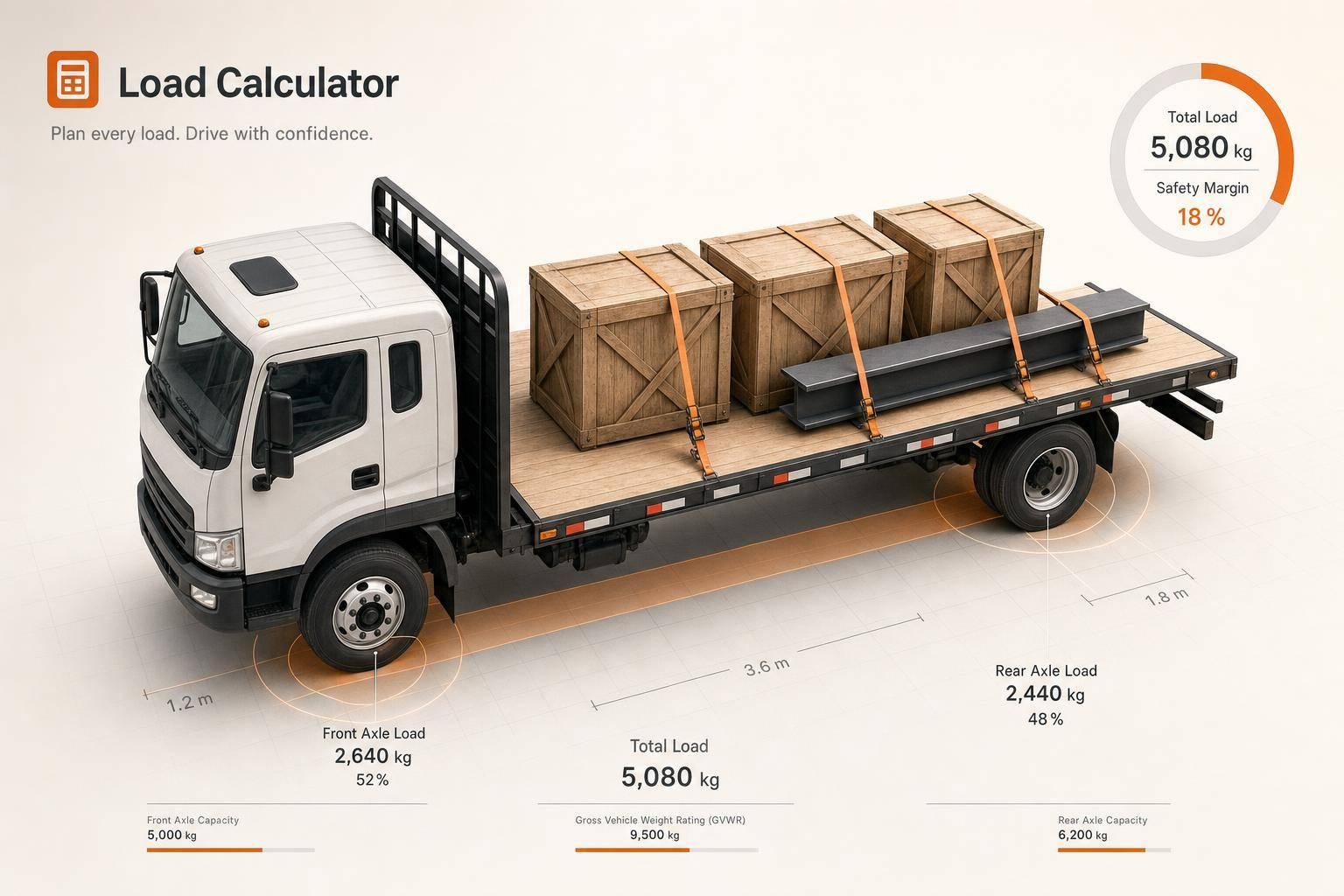
Simple Load Planning Without the Guesswork
A load calculator is one of the fastest ways to check whether a planned lift, shipment, or equipment setup makes sense before work begins. Instead of estimating by eye, you can enter item count, unit weight, extra load, and an optional capacity limit to see the total in seconds. That’s useful for warehouse teams, movers, drivers, and jobsite crews who need a quick answer without digging through spreadsheets.
Practical Checks for Everyday Use
This tool is designed for real-world planning, not engineering certification. It helps you compare total weight against a stated limit, apply a safety margin, and view a converted value in pounds or kilograms. If you need a quick capacity check, it can show whether a load is comfortably within range, getting close, or pushing past the limit.
Helpful Estimates, Clearly Labeled
For transport planning, the tool can also provide a simple axle-share estimate based on equal distribution. That’s helpful for rough planning, but it should never be treated as a certified axle analysis. A good load calculator gives you clarity on the arithmetic while reminding you that weight distribution, movement, terrain, and equipment ratings still matter.
FAQs
Is this load calculator accurate enough for real work?
It’s accurate for straightforward arithmetic like total weight, basic capacity comparison, and simple planning estimates. That makes it useful for warehouse checks, trailer loading, moving jobs, and day-to-day preparation. What it does not do is replace an engineered lift plan, manufacturer load chart, axle certification, or site-specific safety review. Real-world conditions like shifting cargo, uneven placement, road shock, slope, rigging angles, and equipment condition can change what’s actually safe.
What does the safety margin do?
The safety margin reduces the usable capacity shown by the tool so you can plan more conservatively. For example, if your capacity limit is 1,000 and your safety margin is 10%, the recommended working threshold becomes 900. That gives you a buffer instead of planning right at the maximum. Many teams prefer this because published limits don’t always reflect dynamic forces, imperfect loading, or day-to-day operating variables.
How should I use the per-axle estimate?
Use it as a rough equal-distribution estimate only. The calculator assumes the load is shared evenly, which is often not what happens in real transport or equipment setups. Actual axle loads depend on item placement, center of gravity, suspension behavior, deck length, and how the weight shifts in motion. If axle compliance or engineering safety matters, you should verify the numbers with proper measurements, manufacturer guidance, or a qualified professional.
Blogs, calculators, and other content on the TDS blog is for educational purposes only and does not constitute crane or rigging advice. For information specific to your situation, please contact us for an estimate or consultation.
Related Articles

Solving Common Crane Rigging Problems Fast
Explore essential strategies for addressing common crane rigging challenges, ensuring safety, efficiency, and compliance on construction sites.

Construction Project Safety Checker
Assess jobsite safety in minutes with a simple checklist, compliance score, and practical recommendations to address common construction risks.

How to Calculate Crane Lifting Capacity Safely
Learn how to safely calculate crane lifting capacity by understanding key factors, reading load charts, and adhering to safety protocols.