
Top 7 Metrics for Evaluating Crane Operators
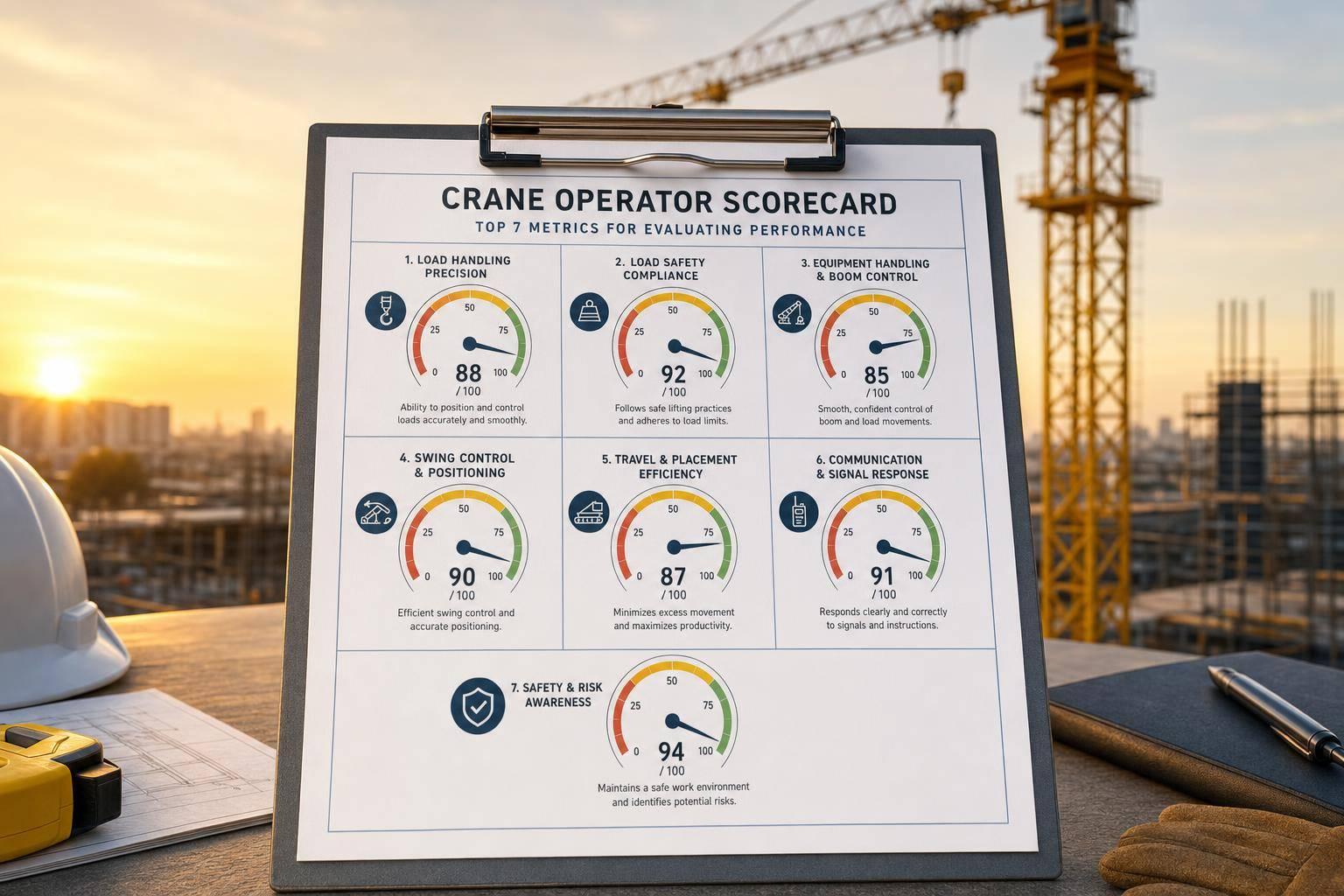
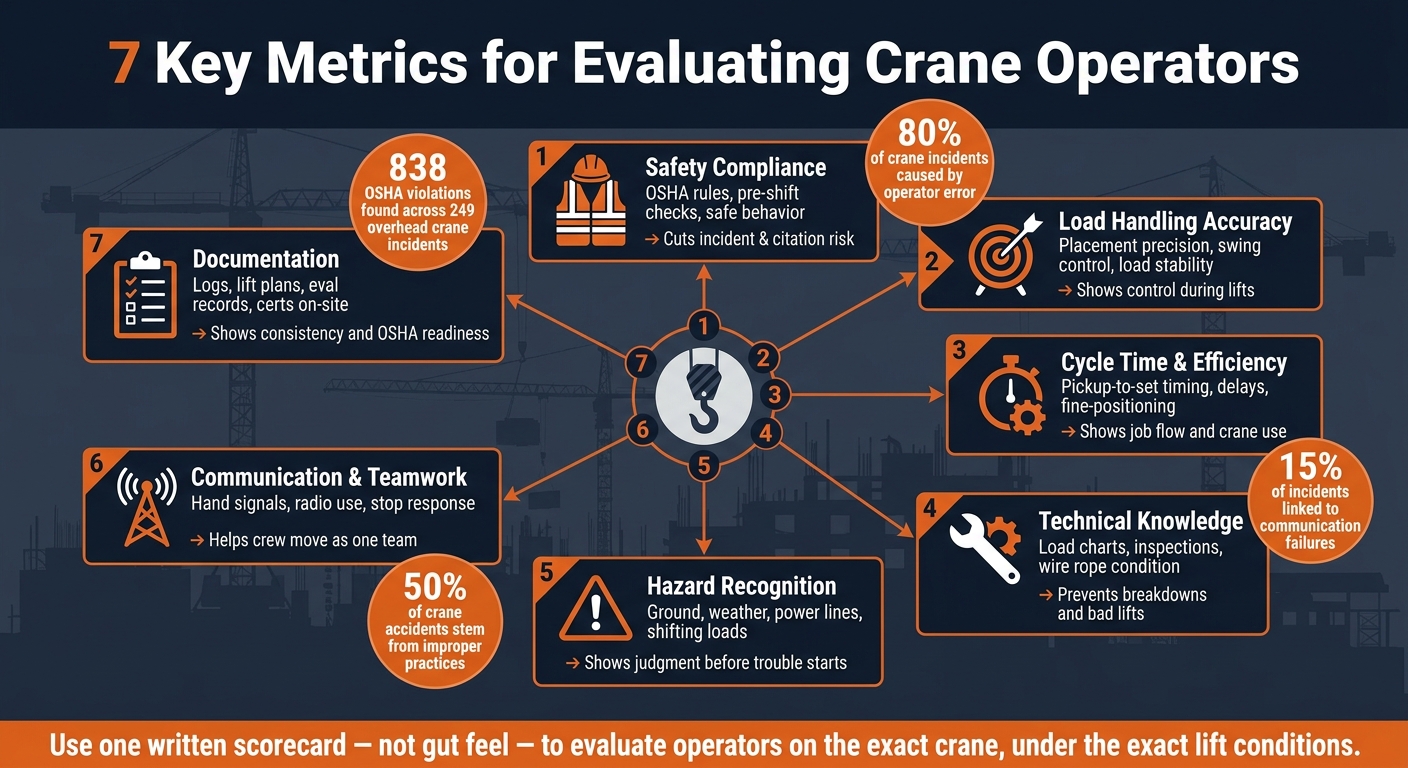
If I had to judge a crane operator fast, I’d look at 7 things: safety, load control, cycle time, machine knowledge, hazard spotting, communication, and paperwork. Those 7 checks cover the main risks behind crane incidents, project delays, and OSHA trouble.
Here’s the short version:
- Safety comes first. Certification alone does not prove an operator can run a specific crane on a specific job.
- Precision matters. A good operator places loads where they belong without swing, drift, or rough movement.
- Time matters too - but not by itself. A fast lift is useless if it creates risk.
- Machine knowledge matters every shift. Inspections, load charts, and warning signs like wire rope damage can’t be skipped.
- Judgment matters under change. Ground issues, wind, power lines, and shifting loads can turn a routine lift into a bad one.
- Communication matters on every move. Missed signals and slow stop response can lead to incidents.
- Records matter. Logs, lift plans, and re-evaluations show whether the operator follows the same standard over time.
The article’s main point is simple: the best way to score crane operators is to use one written scorecard instead of gut feel. I’d use that scorecard to track jobsite behavior, not just licenses or test results, and I’d tie each score to retraining and follow-up when issues show up.
Quick Comparison
- Safety Compliance: Evaluate adherence to OSHA requirements, completion of pre-shift inspections, and consistent safe work practices; strong compliance reduces both workplace incidents and regulatory citation risk
- Load Handling: Observe load placement, swing control, and overall load stability during lifting operations; these factors demonstrate an operator's ability to maintain control and prevent accidents
- Cycle Time: Measure pickup-to-set timing, identify delays, and assess precision during final load positioning; this helps gauge efficiency and effective crane utilization
- Machine Knowledge: Verify understanding of load charts, inspection procedures, warning indicators, and equipment limitations; solid technical knowledge helps prevent equipment failures and unsafe lifts
- Hazard Recognition: Assess the operator's awareness of ground conditions, weather impacts, power lines, and shifting loads; proactive hazard identification reflects sound judgment and risk management
- Communication: Observe the use of hand signals, radio communication, and responses to stop commands; effective communication helps ensure safe coordination among crew members
- Documentation: Review inspection logs, lift plans, evaluation records, certifications, and other required paperwork; accurate documentation demonstrates consistency, accountability, and OSHA readiness
Put simply, this article is about scoring what an operator does on the job, on the exact crane, under the exact lift conditions in front of them.
7 Key Metrics for Evaluating Crane Operators
How Do I Evaluate My Crane Operators?
sbb-itb-6be7c12
What Makes a Good Crane Operator Metric
A good metric comes down to two things: it must be measurable and repeatable, and it needs to tie straight to safety or project results.
That’s the line between a solid standard and a fuzzy one. Vague rules fall apart from one operator or jobsite to the next. Concrete standards hold up. Think of things like completing a pre-operation checklist, following load chart limits, or keeping radio communication accurate with the signal person. Those are clear. You can check them, score them, and use them again on another lift.
That said, the standard isn’t the same in every case. It shifts with the crane, the lift, and the jobsite.
Tower cranes and mobile cranes call for different skills. OSHA says assessments must match the specific crane type and configuration, including lifting capacity, boom length, and attachments. Evaluators also have to score the job conditions that were actually in play. Blind lifts, personnel hoisting, multi-crane coordination, weather, ground conditions, and visibility all change what a fair score should look like.
The table below shows the difference between a strong metric and a weak one.
 One more thing: speed by itself is not a valid metric. Fast doesn’t mean safe, and it doesn’t mean the lift was done right. With the metric standard in place, the next piece to look at is safety compliance.
1. Safety Compliance and OSHA Rule Adherence
Safety compliance is the starting point. If an operator doesn't follow OSHA rules on a steady basis, strong marks in other areas don't mean much. That standard needs to show up in day-to-day actions supervisors can actually see.
OSHA says employers must verify that an operator is competent on the specific equipment being used. A certification by itself does not prove qualification. So the review process should focus on what the operator does on site, not just what's on paper.
Key safety behaviors to watch include:
- Pre-shift inspections under 29 CFR 1926.1412
- Correct response to signals
- Smooth, deliberate control use
- Clear sight lines during operation
- Safe cab entry and exit
It also helps to use basic visual and hearing standards to make sure the operator can spot hazards and communicate clearly.
When problems show up, OSHA's employer-duty rules mean the operator should be retrained and re-evaluated. A near-miss, signs of impairment, or a change in medication should trigger that review. Keep inspection logs, re-evaluation dates, and corrective actions in one place. That gives supervisors a simple way to spot patterns and step in early.
TDS Erectors & Crane Service supports this process with OSHA-certified operators and routine safety checks. Once compliance is steady, the next metric is load handling accuracy and precision.
2. Load Handling Accuracy and Precision
After safety compliance, the next thing to check is whether the operator can place the load where it needs to go and keep it steady during the lift.
This part of the review comes down to three things: placement accuracy, swing control, and load stability. Evaluators use a standardized form so scoring stays consistent and impartial. Put simply, this metric shows whether safe operation also leads to accurate placement.
A strong operator should be able to read load charts correctly and stay within rated capacity, boom length, and operating limits. Load-monitoring systems add hard data on load distribution, stress, and capacity. That matters because lift behavior can change fast. Wind and ground conditions can shift how the load moves, so the operator needs to adjust in real time to keep the load stable.
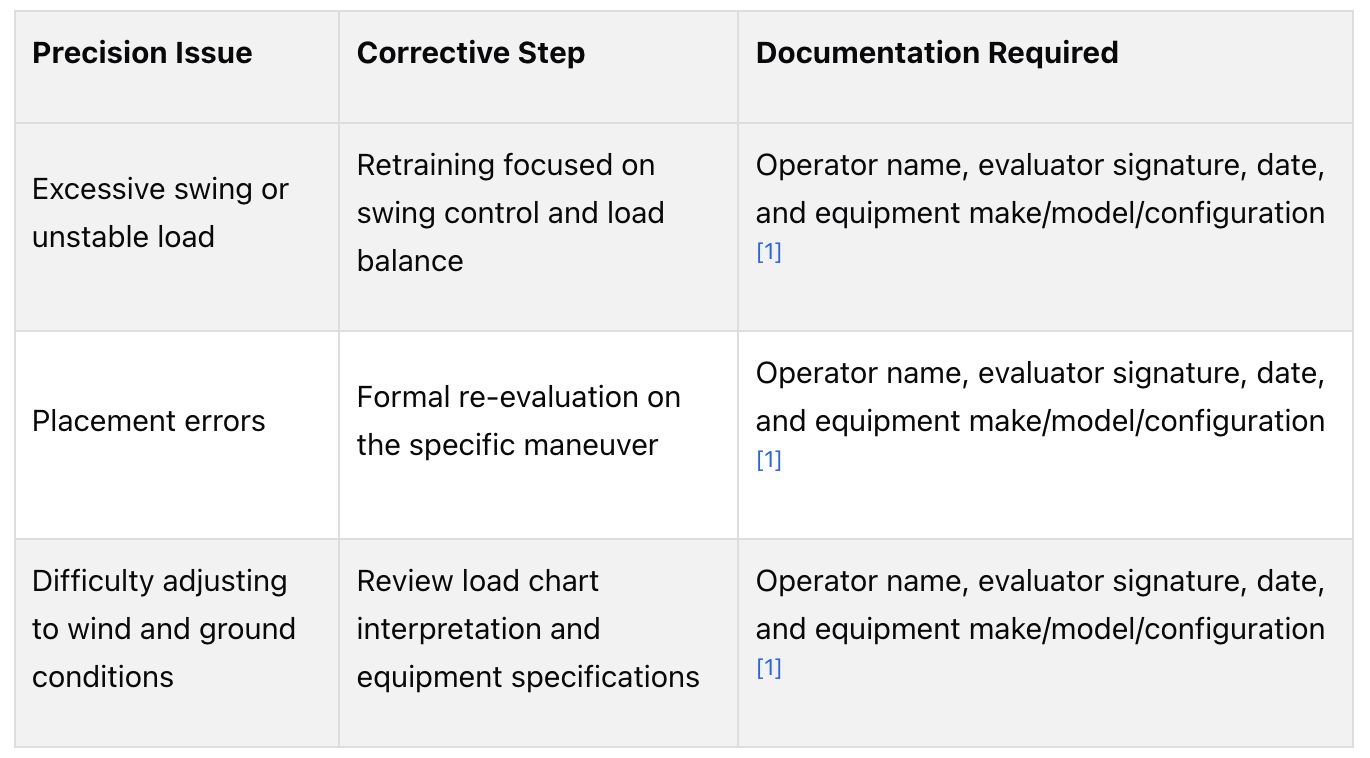
If an operator keeps missing the mark, the fix should be specific. Repeated misses should trigger retraining on the exact maneuver involved, followed by a formal re-evaluation on the exact equipment configuration in use, including boom length, attachments, and counterweight setup. Those records also help set a precision baseline before you move on to cycle time and efficiency.
Use the table below to separate the type of error from the right corrective step.
 3. Lift Cycle Time and Operational Efficiency
Cycle time tracks the full span from pickup to the next lift. It’s a direct read on site productivity and crane use.
A smart way to read this metric is to split it into two parts:
- Travel time
- Fine-positioning time
That makes it easier to see what’s slowing things down. Is the crane covering too much ground? Is the operator making small corrections near the set point? Or is the site layout getting in the way? This breakdown helps answer that fast.
Inconsistent cycle times can also point to equipment trouble, not just operator performance. Hydraulic leaks, worn bearings, rollers, or outrigger issues can all slow a lift. Those cases should be logged apart from operator scoring.
Use root-cause tracking to separate operator delays from site delays and equipment delays.
- Operator Hesitation During Fine-Positioning: Often identified through load-monitoring data that reveals slow or inconsistent movements during final placement; improvement typically comes from simulation-based training and hands-on practice to build operator confidence and precision
- Communication Lag with Signal Persons: Can be detected by observing the time between a signal being given and the operator's response; using qualified signal persons in accordance with OSHA 1926.1400 helps improve coordination and reduce delays
- Mechanical Drag or Equipment Wear: Usually uncovered during daily shift inspections when components show signs of excessive friction, wear, or reduced performance; corrective action includes maintenance and inspections aligned with ANSI/ASME B30 and ISO 4309 standards
- Poor Site or Supply Layout: Revealed by comparing travel duration against actual distance moved, highlighting unnecessary crane travel or material handling; efficiency can be improved by relocating material staging areas closer to the lift path and work zone
If cycle times still run slow after you rule out layout and communication problems, the next place to look is technical knowledge and equipment proficiency.
4. Technical Knowledge and Equipment Proficiency
Technical knowledge shows up in the day-to-day basics: reading load charts, doing inspections the right way, and spotting mechanical trouble before it shuts the lift down.
OSHA 29 CFR 1926.1412 requires each-shift checks, monthly documented inspections, and annual comprehensive inspections. Score operators based on whether they follow that schedule.
A simple visual-and-auditory check can tell you a lot. The operator should scan for deformations, loose wiring, rope kinks, and any odd grinding, popping, or squealing during functional tests.
Wire rope condition needs top attention. Broken wires, kinking, crushing, bird-caging, or core protrusion should fail the check.
They should also verify:
- Load Moment Indicators
- Controls
- Upper limit devices
- Hoist brakes
- Anti-two-block systems
If there are gaps, don’t brush them off. Those issues should lead to retraining and a subject-specific re-evaluation before the operator goes back to full duty.
Once technical skill is verified, the next metric is whether the operator spots hazards before they turn into errors.
5. Hazard Recognition and Decision-Making
Technical skill alone isn't enough. You also need to score how well the operator sees hazards before they turn into incidents. That matters a lot because operator error causes about 80% of crane incidents.
Look at whether the operator notices unstable ground, overhead power lines, shifting loads, and configuration changes before those issues turn into danger. Also pay attention to load movement during the lift. If conditions change, does the operator stop, secure the load, and reassess? That’s the main thing to measure: whether the operator sees risk changing in real time and stops the lift soon enough.
If judgment breaks down, retraining should follow. OSHA requires retraining in the relevant topic when operator performance or knowledge shows it is needed . After that, complete a documented re-evaluation using the same equipment configuration.
6. Communication, Teamwork, and Situational Awareness
Once you've checked hazard recognition, the next step is simple: can the operator communicate those calls clearly during a lift? That matters more than it may seem. Communication failures are tied to 15% of crane-related incidents, so this part of the review should focus on signal accuracy, stop-signal response, and radio discipline.
When noise or distance makes speaking unreliable, use OSHA-standard hand signals. The big test here is immediate stop compliance. If the signal person gives an "Emergency Stop" or "Dog Everything" signal, the operator needs to stop all motion right away.
You should also watch how the operator handles combined movements. A good example is "Raise the Boom and Lower the Load" at the same time. That kind of move isn't just about machine control. It depends on tight coordination with the signal person and a steady read of what's happening on-site.
Two-way radios can help when visibility is poor, but they are backup tools. They should not replace hand signals.
Document near-misses and communication breakdowns as they happen by using digital inspection platforms and incident reports. Effective near-miss reporting can identify 85% of early warning signs before they turn into bigger problems. Give feedback on-site right away, then use targeted simulation drills to retrain repeat issues.
Score these behaviors the same way you score machine handling:
- Response time
- Accuracy
- Consistency
Log every missed signal and each correction. That makes it much easier to spot patterns over time instead of judging performance from one shift or one bad moment.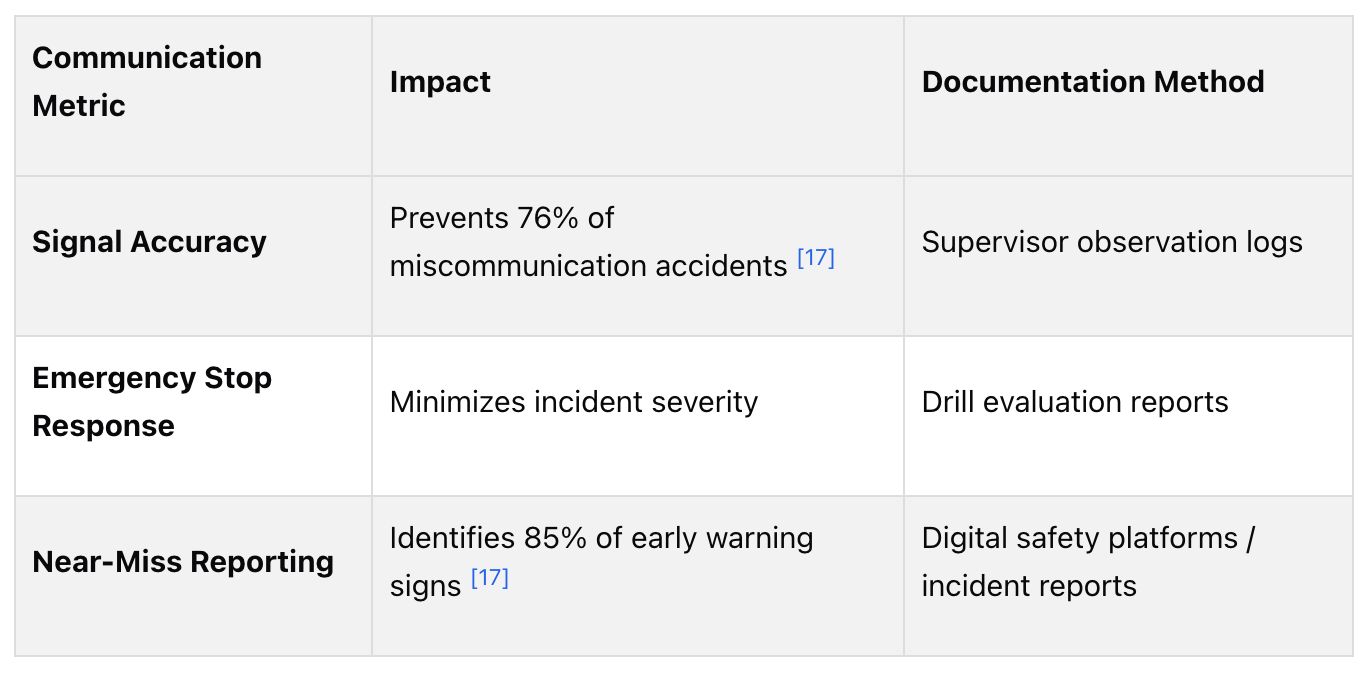 7. Documentation, Consistency, and Improvement Over Time
These records show whether the first six metrics were used the same way, every time. Put simply, recordkeeping is a direct sign of operator professionalism.
Check pre-shift inspection logs, critical lift plans, and ground assessments with load calculations or ground-bearing data - not visual estimates. Physical or digital certification copies must be on site. Operator certifications, rigger qualifications, and signalperson assessments should all be easy to verify during an inspection.
A review of 249 overhead crane incidents found 838 OSHA violations - more than three per incident - which shows how often missing paperwork and unchecked assumptions lead to citations.
Use the same rubric across lifts, sites, and review periods. Standardized evaluation forms aligned with OSHA 29 CFR 1926.1427 help supervisors score jobs the same way, and individual performance records make it much easier to spot progress and repeat deficiencies over time.
The info below shows the main records to review and what “good” looks like for each:
- Pre-Shift Inspection Log: Review records to confirm inspections of the crane, communication equipment, outriggers, and other critical components were completed; these checks should occur before the first lift of every shift
- Critical Lift Plan: Verify that a documented lift plan exists for lifts exceeding 75% of crane capacity, tandem lifts, or operations near power lines; the plan must be completed before any crane movement begins
- Signal Person Qualifications: Confirm written assessments and documentation demonstrating competency in hand signals and crane operating limitations; qualifications should be verified before any lift where the operator does not have a direct line of sight
- Rigging Log: Check that hardware ratings, rigging configurations, and load path geometry are properly documented; logs should be maintained daily, with updates between lifts considered a best practice
- Operator Certification: Ensure the operator's certification matches the specific crane type being used and that a copy is available on-site; certifications are generally valid for five years and must remain current during operations
Then look for a simple pattern: do flagged issues disappear, or do they keep showing up? Scenario-based drills and periodic re-assessments help confirm whether improvement is sticking over time.
Tables make these records easier to compare at a glance.
Where Tables Add the Most Value
The clearest use for tables is simple: they turn operator metrics into fast, repeatable field checks. Instead of relying on gut feel, you can use tables to score performance side by side in a consistent way. Some metrics fit this format better than others.
- Safety Compliance: Use an OSHA Rule Adherence Checklist covering items such as power-line clearances, pre-shift inspections, and other regulatory requirements. This provides a standardized way to compare observed operator behavior against OSHA 1926.1427(j) criteria.
- Load Handling Accuracy: Implement a table of placement accuracy bands categorized by lift type. This helps quantify precision and ensures evaluation scores remain consistent across operators and job sites.
- Lift Cycle Time and Operational Efficiency: Develop lift-cycle benchmark tables based on crane type and configuration. These benchmarks establish clear productivity expectations and enable objective performance comparisons.
- Technical Knowledge and Equipment Proficiency: Use knowledge-rating tables that assess competencies such as load chart interpretation, manual load calculations, and crane-specific software proficiency. This documents the technical skills employers are expected to evaluate under OSHA guidelines.
- Hazard Recognition and Decision-Making: Create hazard-response scenario tables covering factors such as ground stability, site access, weather conditions, and wind exposure. These evaluations measure whether operators correctly identified hazards and took appropriate action to stop or modify the lift.
- Communication, Teamwork, and Situational Awareness: Include communication assessment tables that score hand signal recognition, radio communication clarity, coordination with signal persons, and overall situational awareness. Standardized criteria help ensure fair and repeatable evaluations.
- Documentation, Consistency, and Improvement Over Time: Maintain multi-month performance tracking tables that record evaluation scores, performance trends, corrective actions, retraining requirements, and upcoming evaluation dates. These records support long-term development and help identify when additional training may be needed.
For Technical Knowledge and Documentation tables, include the crane's make, model, and configuration. That means boom length, attachments, and counterweight setup. Without that detail, the score can look neat on paper but say very little about how the operator performed on that actual machine.
"Just as an employee's driver's license does not guarantee the employee's ability to drive all vehicles safely in all conditions an employer may require, crane-operator certification alone does not ensure that an operator has sufficient knowledge and skill to safely use all equipment." - International Sign Association
That quote gets to the point. A certification card tells you something, but not enough. The Knowledge Ratings table matters because it pushes the evaluation past the certification number and into what the operator can actually do with a specific crane on a specific job.
How These Metrics Support Professional Crane Services
These metrics matter most when they work together.
Used as a group, they give you a clear picture of crane service performance. Safety Compliance and Hazard Recognition do the heavy lifting when it comes to preventing incidents. Technical Knowledge and Operational Efficiency help cut breakdowns and delays. And Documentation holds the compliance record in place.
About 50% of crane accidents stem from improper practices or weak safety measures. That’s a big deal. Rigorous pre-operational inspections and preventive maintenance help prevent equipment downtime and struck-by incidents that can throw off project timelines.
Documentation (Metric 7) anchors the compliance record. OSHA 1926.1427(f) requires operator evaluation records to be available at the worksite.
Here’s how each metric shows up in day-to-day crane service outcomes.
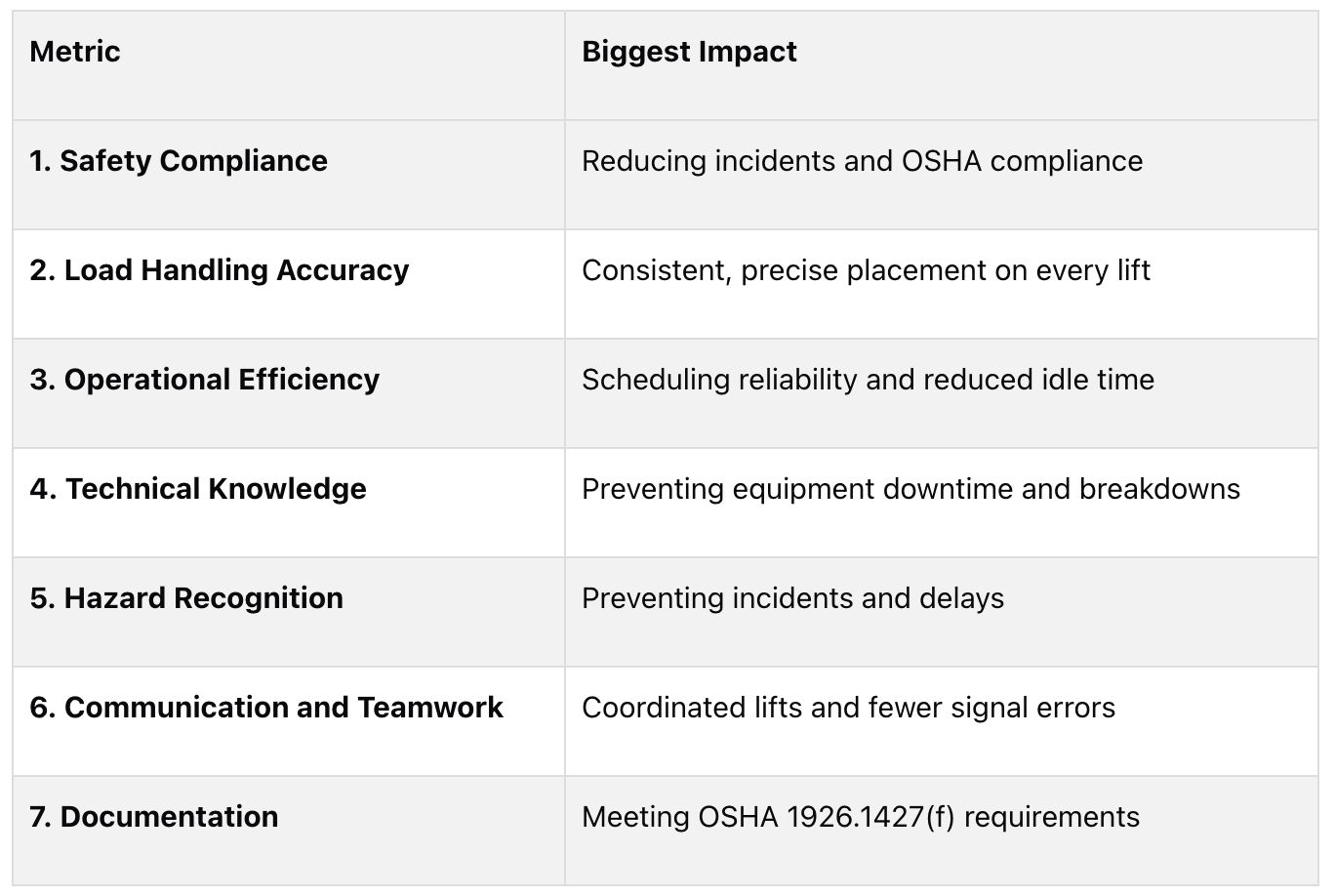 For crane services, this framework checks that operators are competent on the exact configuration in use, including boom length, attachments, and counterweight setup. If an evaluation shows a gap, use a simple loop: evaluate, retrain on the gap, then re-evaluate.
Conclusion
The seven metrics make the most sense when you use them as one scorecard, not as separate checks. Together, they balance safety, precision, efficiency, judgment, communication, and documentation. Each one measures a different part of operator readiness, and the full picture matters more than any single score.
What counts most is balance, not being the fastest or strongest in one area. Speed should never come before safety. An operator who checks rigging, follows signals, and stays disciplined on the job is the better pick.
For employers, the next step is simple: put these seven metrics into a written evaluation form with clear rating standards and use it on a set schedule. Then put those scores to work. Use them to assign retraining, refresh OSHA knowledge, and confirm whether someone is ready for more complex lifts. Track scores over time so you can tell the difference between a one-off mistake and a repeat issue, and so you know when targeted re-evaluation makes sense.
For example, TDS Erectors & Crane Service applies this kind of evaluation to qualify OSHA-certified operators and assign them to work across the 4-state region.
FAQs
Why isn’t crane certification enough by itself?
Crane certification on its own isn’t enough. Operators also need to be checked on their skills, what they know, and how well they can spot and avoid risk on the job.
That broader review helps make crane operation safer.
How often should crane operators be re-evaluated?
Crane operators should be re-evaluated when they receive retraining, or when a performance or knowledge check shows a review is needed.
That re-evaluation should focus on the specific areas covered during retraining.
What should a crane operator scorecard include?
A crane operator scorecard should track three core areas: safety compliance, efficiency, and precision.
Safety compliance shows whether the operator follows site rules, lift plans, inspection steps, and safe handling procedures. This part matters first. If safety slips, everything else takes a back seat.
Efficiency measures how well the operator keeps work moving. A common metric here is gross crane productivity, often tracked as moves per hour. That gives you a clear read on output without overcomplicating the scorecard.
Precision looks at how accurately the operator performs each move. That can include load placement, control during lifts, and how often adjustments or corrections are needed.
Put simply: a good scorecard doesn’t just show how fast someone works. It shows whether they work safely, cleanly, and at a solid pace.
Related Blog Posts
Blogs, calculators, and other content on the TDS blog is for educational purposes only and does not constitute crane or rigging advice. For information specific to your situation, please contact us for an estimate or consultation.
Related Articles
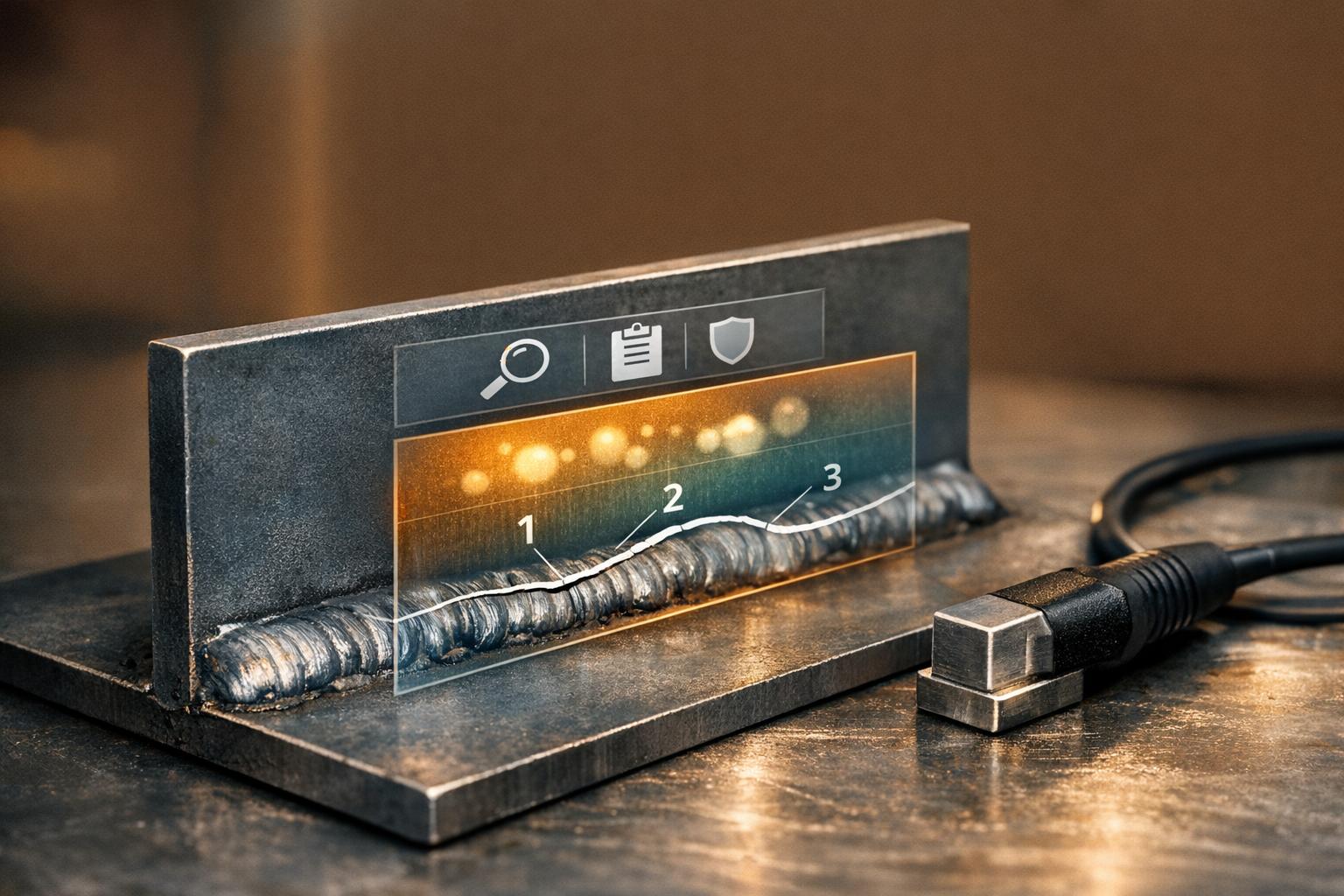
Root Causes of Weld Failures: Analysis Guide
Systematic guide to diagnosing weld failures: defects, root causes, NDT methods, documentation, and prevention tips.
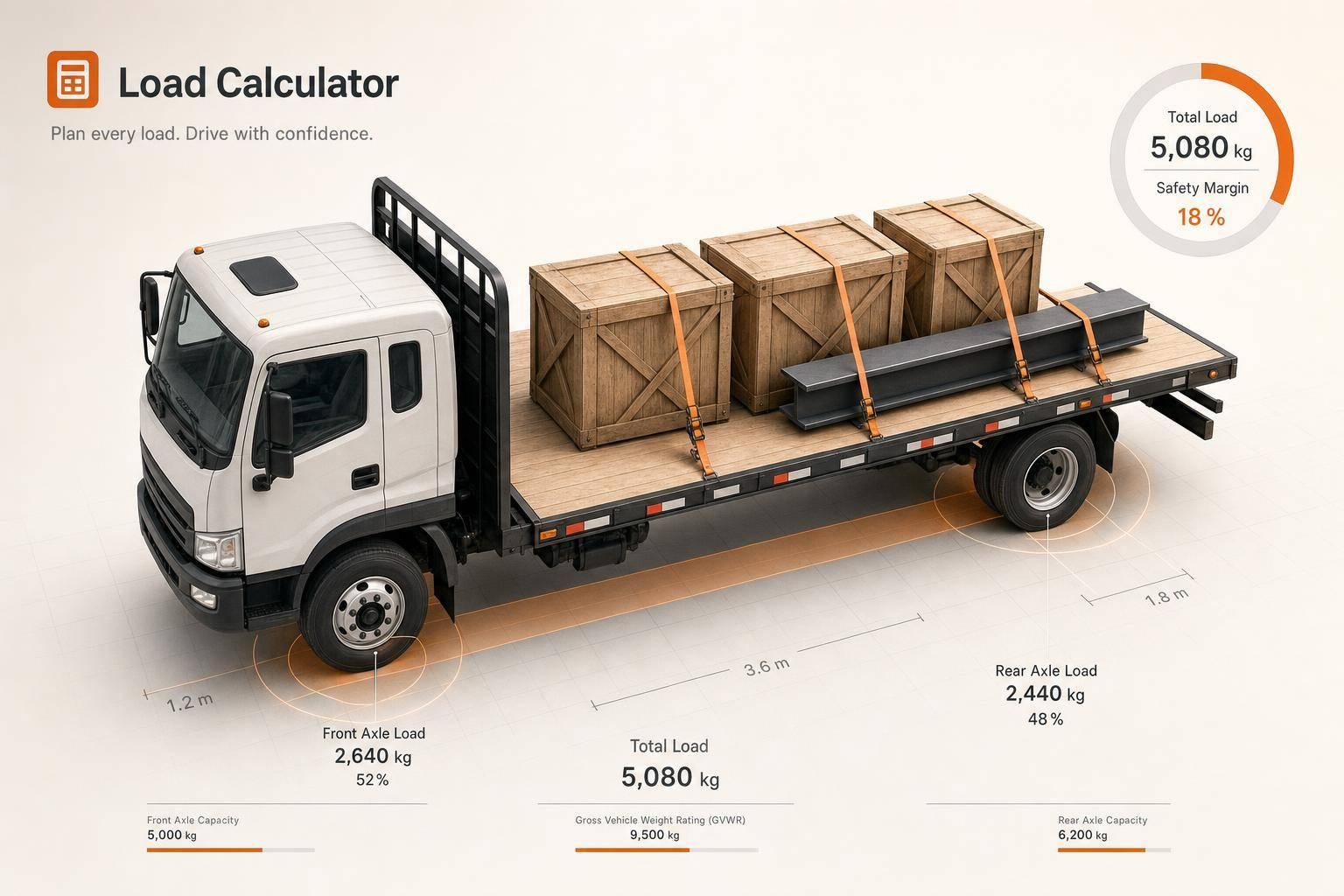
Load Calculator
Quickly calculate total load, capacity limits, safety margins, and axle estimates for lifting, transport, and everyday load planning.
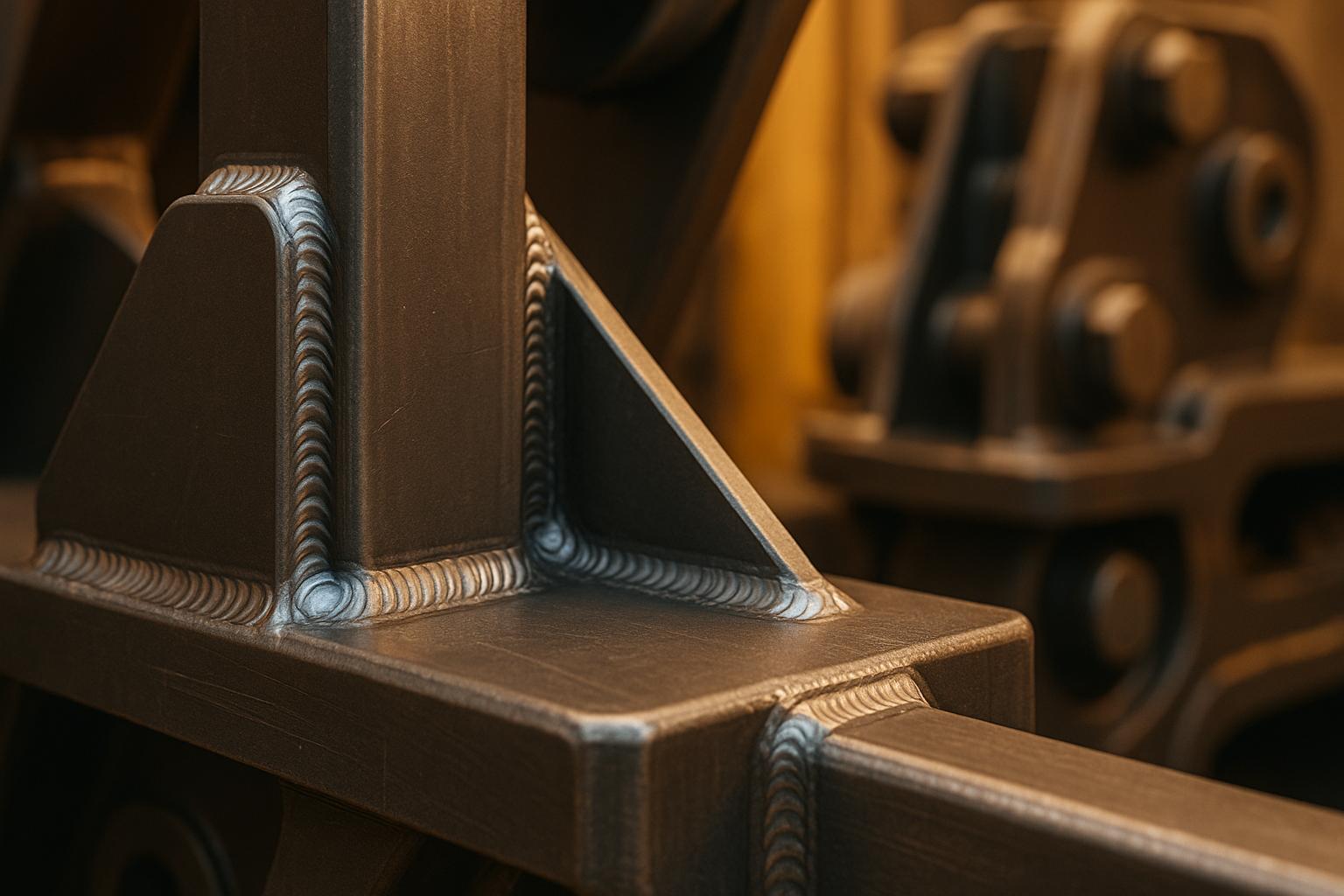
How Structural Welding Impacts Equipment Durability
Explore how structural welding enhances equipment durability, reduces maintenance costs, and ensures long-lasting performance in heavy machinery.