
Crane Breakdown Response: Best Practices

When a crane breaks down, we stop work, keep people clear, and secure the site before troubleshooting. We follow the manufacturer’s emergency procedure - not try to finish the lift. If electrical contact is suspected, we keep everyone away until the utility confirms the area is safe.
Our response follows 3 steps:
- Control the hazards: Set barriers, assign one coordinator, and isolate energy without removing load support.
- Plan recovery and verify repairs: Use qualified personnel, document each recovery movement, and complete required inspections and tests before restart.
- Prevent another breakdown: Record the cause, update maintenance and training, revise the schedule, and confirm replacement equipment or outside support when needed.
Our rule is simple: <u>a cleared alarm is not permission to restart.</u> We resume lifting only after the required checks pass and restart authorization is documented - not because the schedule is slipping.

Crane Breakdown Response: From Shutdown to Safe Restart
Stop Work and Secure the Site
Stop Movement and Check Immediate Hazards
Honor stop and emergency-stop signals immediately. Stop hoisting, lowering, traveling, and slewing. Keep the load, boom, and crane stable. Don’t try to finish the lift or reposition a suspended load; follow the crane manufacturer’s emergency procedure.
Account for all workers from a safe location. Call 911 for injuries, fire, collapse, electrocution, or other emergencies. If electrical contact is suspected, notify the utility immediately. Once people are safe, preserve alarms and operating records for diagnosis. If electrical contact is involved, move immediately from shutdown to energized-scene control.
Treat electrical contact as an energized scene. Assume the crane and nearby ground are energized. Keep everyone away from the crane, load line, load, and anyone touching them until the utility confirms de-energization. The operator should stay in the cab unless fire or another immediate threat makes escape unavoidable.
Do not approach or attempt a rescue until the utility confirms de-energization and the area is safe. Once the energized hazard is controlled, expand the exclusion zone before anyone attempts an inspection.
Set Exclusion Zones and Isolate Energy
Barricade the full hazard area. Include the load, boom, counterweight, swing radius, travel path, collapse area, and nearby structures. Use barriers, signs, and access control. Stop nearby traffic, excavation, welding, vehicle movement, and any other work that adds risk.
Keep the boundary in place until a documented recovery plan establishes safe access. From a safe location, assess crane level, ground settlement, outriggers or tracks, overhead hazards, and structural stability. No one should enter the collapse zone just to inspect damage.
Isolate energy without removing support. Identify electrical, hydraulic, pneumatic, mechanical, and gravity hazards. Before troubleshooting, authorized personnel must follow applicable energy-control procedures and manufacturer instructions, then verify isolation as required.
Do not release pressure or disconnect power until the load is secured. First, support the load or otherwise make it safe under a documented plan. Prohibit bypassed safety devices, forced controls, improvised repairs, unplanned movement, and unauthorized restart. Once the site is stable, assign one coordination lead and maintain one clear record of events.
Assign Roles and Record the Breakdown
Assign one movement coordinator and one radio channel. Assign a supervisor, operator, qualified signal person, safety lead, maintenance lead, and emergency coordinator. Everyone must retain stop-signal authority.
Begin technical inspection only after stabilization, energy control, and authorized access. Match personnel qualifications to the inspection required - operator certification alone does not establish inspection competence. Take photographs only from safe locations.
Once hazards are controlled, record the time, configuration, load, rigging, weather, alarms, operating sequence, and maintenance history.
sbb-itb-6be7c12
CRANE I MOBILE CRANE I Safety and Emergency Procedures of Crane I safety protocols hazard for Crane
Plan Recovery, Complete Repairs, and Verify Restart
Once the site is stable and the breakdown is recorded, begin recovery planning.
Find the Defect and Document the Recovery Plan
Have a qualified person use the breakdown record to compare the operator’s report, manufacturer instructions, maintenance records, load charts, and lift plan with the crane’s actual configuration. Stop the assessment if the load shifts, the ground settles, or weather worsens. Assess only systems that can be reached safely. Do not enter areas exposed to suspended loads, stored pressure, electrical energy, hydraulic movement, or other uncontrolled hazards. Diagnosis, recovery, repair, and return to service are separate decisions.
Before any recovery movement, document the sequence, load weight and center of gravity, rigging and attachment points, personnel, communications, exclusion zones, and stop criteria. If another crane assists, verify capacity at every planned radius, the load share during transfer, and ground and outrigger support. A multiple-crane recovery needs a coordinated lift plan, one lift director, and coordinated signals. Combined capacity alone is not enough. Use the plan to control every movement before repair access begins.
Use Qualified Personnel and Approved Repair Procedures
Use mechanics, electricians, welders, and other qualified personnel with equipment-specific skills, required PPE, fall protection, and energy controls. Follow manufacturer repair instructions and replacement-part requirements. Structural welding and changes that affect capacity or safe use need applicable manufacturer approval or qualified engineering review - not an improvised field fix.
Coordinate repair access and schedule changes with the controlling contractor, equipment owner, and affected subcontractors. Do not bypass a safety device or operate with an unresolved defect to meet a deadline.
Inspect and Test Before Restart
After repairs, inspect and test the crane before restarting it. Under OSHA 29 CFR 1926.1412, repairs or adjustments that affect safe operation require inspection by a qualified person before initial use. Apply the inspection requirements for the specific repair, modification, or assembly, including affected components.
Verify that defects are corrected, guards and connections are restored, and the crane configuration and inspection records are checked. Perform required functional testing of repaired parts and related systems, including brakes, controls, safety devices, and operator aids. Start with controlled no-load checks, then complete any required load test under a written procedure.
Keep the crane out of service until all required inspections and tests pass. Record findings, repair details, test results, and approved operating limits. Do not invent reduced-capacity limits to work around a defect. Follow tag-out controls under 1926.1417, brief affected crews, and obtain documented site authorization before resuming work. Restart only after repairs, qualified inspection, functional checks, required load testing, records, and site authorization are complete.
Prevent Repeat Breakdowns and Plan Project Support
Once the crane is back in service, shift the focus from recovery to prevention.
Update Inspections, Maintenance, and Training
Turn root-cause findings into maintenance tasks, each with an owner and due date. Track operating hours, defects, replaced parts, corrective actions, and each inspector’s name and qualification. Address the specific maintenance or competency gap behind the failure.
Follow manufacturer procedures and any stricter inspection intervals that apply: competent-person shift and monthly inspections, qualified-person annual inspections at least every 12 months, and required wire-rope, post-assembly, post-repair, and severe-service inspections. Inspect any crane idle for 3 months or more before reuse. Keep monthly records for at least 3 months and annual records for at least 12 months.
In Arkansas and surrounding states, use weather and soil changes as inspection triggers. After heavy rain, reassess soil bearing capacity, drainage, mats, outrigger support, and access routes. In extreme heat, follow manufacturer limits for hydraulic, electrical, and engine systems, and monitor fluid temperatures.
Before storms, assign someone to monitor weather and make shutdown decisions early. Rehearse shutdown, communication loss, evacuation, and equipment-isolation procedures. Keep manuals, lift plans, emergency contacts, and utility information within reach.
Use post-breakdown retraining to address competency gaps the incident revealed. Verify that each operator has the training and credentials required for the specific crane configuration. Check signal-person and rigger qualifications separately. Use the breakdown record to guide the next maintenance cycle and project reset.
Report the Incident and Revise the Schedule
Complete the incident file with injuries, damage, timestamped photos, witness accounts, inspection findings, and repair records. Separate observed facts from suspected causes. Assign one person to manage reporting deadlines and retention rules. OSHA severe-injury reporting and OSHA injury recordkeeping are separate duties. A property-damage-only event may still require other reports.
Rebuild the schedule around the verified repair and inspection timeline - not the original project plan. Resequence deliveries and work that can proceed safely, adjust crew assignments, and notify the owner, general contractor, subcontractors, suppliers, and affected workers.
Before rescheduling equipment, check capacity at the required radius, access, setup space, ground support, electrical clearances, and operator availability. Keep the same safety checks in the revised schedule. Review corrective actions after the next several shifts and monthly after that. Keep each action open until there is evidence it worked.
If the incident calls for replacement equipment or outside fabrication, bring support in early.
Coordinate Equipment Support With TDS Erectors & Crane Service
Contact TDS Erectors & Crane Service for crane rentals, heavy-duty equipment rentals, or fabrication and welding support in its four-state region. Share the crane’s make, model, configuration, failure symptoms, required capacity and reach, site conditions, access limits, and delivery window.
Ask about replacement rentals and recovery support. Get written confirmation of coverage, availability, transport, pricing, and response time. Verify operator qualifications and repair credentials separately. Obtain a written scope before mobilization, and do not assume an emergency arrival time.
Conclusion: Confirm Safety Before Restart
A cleared alarm is not permission to restart. Restart only after the crane is secure, a qualified person has assessed the defect, and post-repair inspection and testing are complete.
Once the crane is cleared, document restart authorization before work resumes. Record inspection findings, test results, operating restrictions, and restart authorization details. Before lifting resumes, brief the operator, riggers, signal person, and affected trades. If a new alarm, unusual noise, or control problem occurs, stop and reassess.
After restart, follow through on prevention. Include open corrective actions in the next shift’s handoff. Before the next lift, review those actions and confirm that backup equipment, service contacts, and support are available.
FAQs
What if the crane loses power with a load suspended?
Operators must follow their emergency response training to secure the crane, lower the load under control, and evacuate if needed. Precise actions and clear communication between the operator and ground crew help keep the crane stable.
TDS Erectors & Crane Service provides OSHA-certified operators trained in these load-handling and emergency procedures to support safe, quality work across the four-state region.
Does every crane repair require a load test?
No. OSHA requires load testing before new, altered, or significantly repaired cranes enter service. Typical proof-test loads are 110% of rated capacity for mobile cranes and 125% for overhead or gantry cranes, unless the manufacturer specifies otherwise.
Repairs or adjustments that affect safe operation - including work on load-bearing structures, brakes, or controls - also require an inspection by a qualified professional before use to confirm structural integrity and capacity.
Who can authorize a crane’s return to service?
A qualified person must approve a crane’s return to service after repairs, modifications, or an extended period of inactivity. That person must hold a recognized degree or certification, or have extensive training and field experience. They also need the skills to inspect the equipment, confirm that safety issues have been resolved, and carry out any required post-repair proof testing.
TDS Erectors & Crane Service’s qualified personnel can handle these inspections and approve the equipment for safe operation.
Related Blog Posts
Blogs, calculators, and other content on the TDS blog is for educational purposes only and does not constitute crane or rigging advice. For information specific to your situation, please contact us for an estimate or consultation.
Related Articles
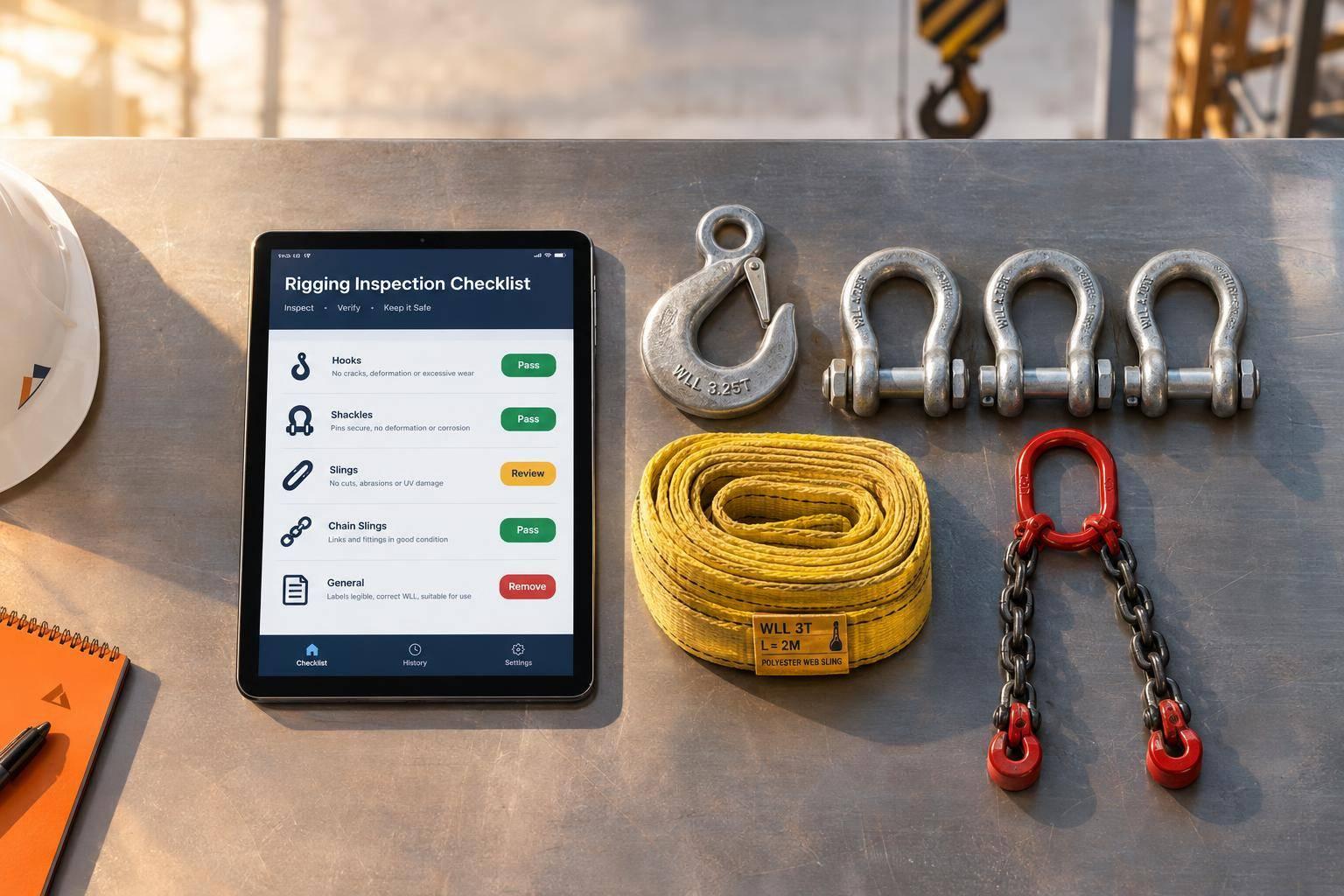
Rigging Inspection Checklist
Run a quick rigging gear inspection checklist online before a lift, with live pass, review, or remove-from-service results.

Ultimate Guide to Welding Inspection and Quality Control
Comprehensive guide to welding inspection and quality control: pre-weld checks, in-process monitoring, post-weld NDT, WPS/PQR compliance, and records.

How Structural Welding Impacts Equipment Durability
Explore how structural welding enhances equipment durability, reduces maintenance costs, and ensures long-lasting performance in heavy machinery.