
Hard Hats vs. Helmets: PPE for Crane Operators
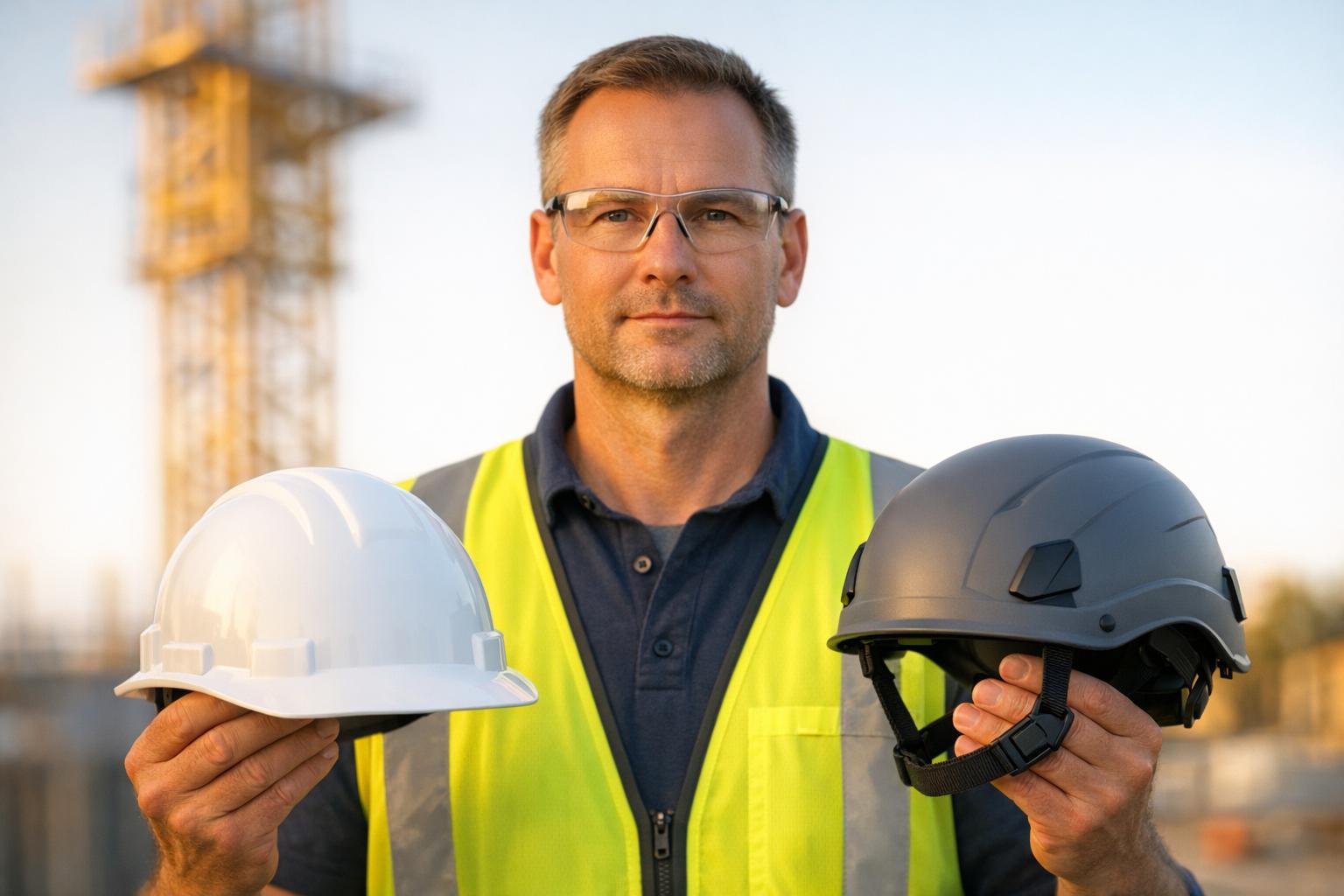
Crane operators face serious risks daily, with head injuries accounting for 1 in 5 construction fatalities. OSHA mandates ANSI-compliant head protection, but choosing between hard hats and safety helmets is key for safety and compliance. Here's the breakdown:
- Hard Hats: Affordable, lightweight, and suitable for basic overhead hazards. However, they lack side protection and often fall off during movement or falls.
- Safety Helmets: Offer 360° protection, include chin straps, and are better for lateral impacts and falls. They last longer but cost more and require proper training for use.
Quick Comparison:
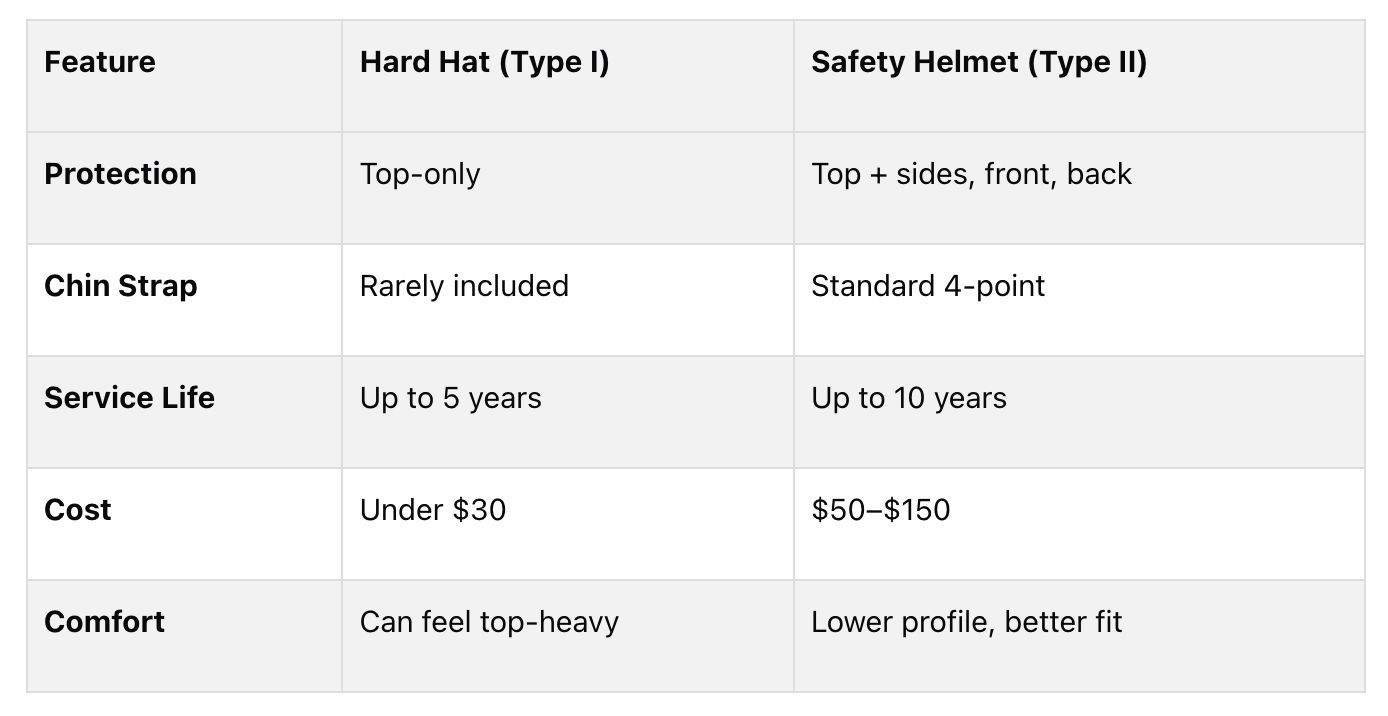 For crane operators and riggers exposed to swinging loads or side impacts, Type II safety helmets with chin straps are safer and align with OSHA standards. While pricier, they reduce injury risks and long-term costs. Always base PPE choices on a hazard assessment.
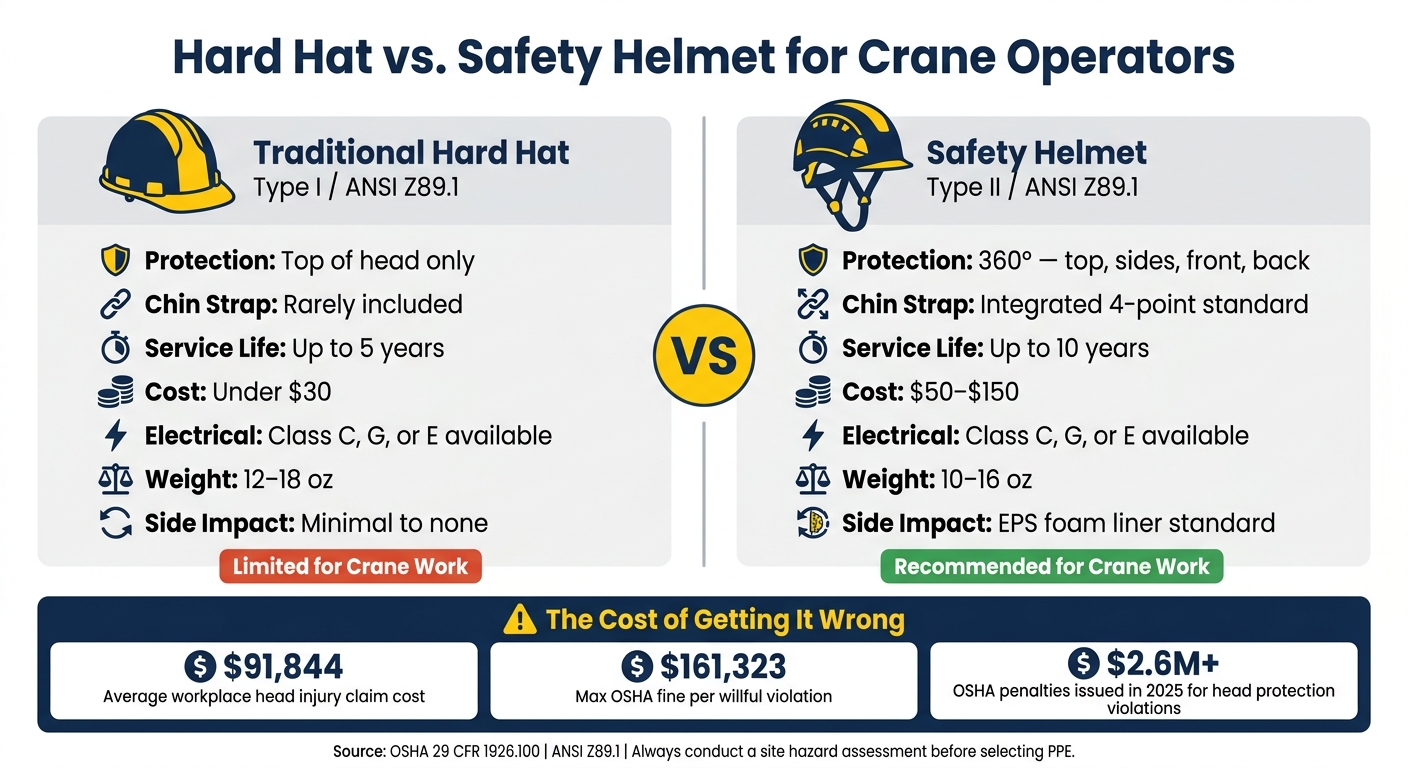
Hard Hat vs. Safety Helmet: Head Protection Comparison for Crane Operators
Head Protection Requirements in Crane Operations
OSHA and ANSI Standards for Head Protection
When it comes to head protection, OSHA mandates the use of ANSI-certified helmets. The ANSI Z89.1 standard outlines two helmet types and three electrical classes to address various hazards:
- Type I helmets guard only the crown of the head.
- Type II helmets offer additional protection, covering the sides, front, and back. This makes them a better choice when dealing with unpredictable movements, like swinging or shifting loads.
For electrical protection, helmets are categorized as:
- Class E: Withstands up to 20,000 volts, ideal for high-voltage environments.
- Class G: Handles up to 2,200 volts, suitable for general construction.
- Class C: Provides no electrical protection and is unsuitable for crane operations near energized equipment or power lines.
Here’s a quick reference guide:
- Type I Hard Hats: Provide protection against impacts to the top (crown) of the head and are best suited for environments with basic falling-object hazards directly overhead
- Type II Hard Hats: Protect against both crown and lateral impacts, making them a better choice for crane operations involving swinging loads, confined work areas, and multiple impact risks
- Class E (Electrical) Hard Hats: Offer the highest level of electrical protection, rated for exposure up to 20,000 volts; ideal for crane work near high-voltage power lines or energized equipment
- Class G (General) Hard Hats: Provide electrical protection up to 2,200 volts and are commonly used in general construction and standard crane operations where high-voltage exposure is not a primary concern
- Class C (Conductive) Hard Hats: Do not provide electrical protection and are generally not recommended for crane operations due to the potential presence of electrical hazards and overhead risks
For crane operations, selecting the right helmet type and electrical class is critical. Always check for the permanent ANSI Z89.1 stamp inside the helmet, which includes details like the manufacturer, production date, type, and class. Relying solely on packaging claims won’t meet OSHA's compliance standards.
These guidelines provide a foundation for addressing the specific risks workers face on crane sites.
Head Protection Hazards in Crane Work
Employers are required by OSHA to perform and document a hazard assessment if overhead dangers exist. Any identified risks - such as hoisted loads, suspended beams, or tensioned rigging lines - make head protection mandatory.
"If an employee(s) has the potential to be in the vicinity of an overhead hazard that could fall and strike them, for tasks like lifting loads with a crane or a hoist, then 29 CFR 1910.135(a)(1) would apply and head protection would be required." - Scott C. Ketcham, Acting Director, Directorate of Enforcement Programs, OSHA
Crane worksites pose unique challenges, including risks from falling objects and lateral impacts caused by swinging loads, tag lines, or boom movements. Courts have even ruled that being within a "zone of danger" is enough to require head protection.
The financial consequences of non-compliance are steep. In 2025, OSHA issued 833 citations for violations of 29 CFR 1926.100, leading to penalties exceeding $2.6 million. A single "Willful or Repeat" violation can result in fines up to $161,323 per instance. Beyond fines, workplace head injuries carry an average claim cost of $91,844 in medical and administrative expenses. These numbers highlight the importance of investing in proper PPE - it’s a cost-effective way to protect both workers and businesses.
sbb-itb-6be7c12
Hard Hats for Crane Operators
How Hard Hats Are Built
Hard hats are designed with two main components: a rigid outer shell and an internal suspension system. The outer shell is usually made from materials like high-density polyethylene (HDPE), fiberglass, or phenolic resin. Phenolic resin, in particular, is ideal for high-heat environments such as steel mills. Inside, the suspension system - either a 4-point or 6-point ratchet design - creates a gap of 1 to 1.25 inches between the shell and the wearer’s head. This gap is crucial as it absorbs and redirects the energy from impacts, reducing the risk of head injuries.
Many hard hats feature a front bill or full brim to shield workers from sun glare and rain. For instance, the MSA Skullgard Full Brim Hard Hat is a Type I, Class E helmet with a phenolic resin shell. This makes it a great choice for heavy industrial environments. These design features play a role in determining their cost and suitability for various job settings.
Benefits and Use Cases
Hard hats are lightweight, easy to find, and budget-friendly. Type I models are especially economical, often priced under $30, compared to over $100 for safety helmets. This affordability is a significant factor when equipping large teams.
Most ANSI-compliant hard hats are also highly adaptable, featuring standard accessory slots for attaching earmuffs, face shields, or communication headsets. For roles like supervisors, riggers, or signal persons who face risks from falling objects, a Type I hard hat provides effective and compliant protection.
Where Hard Hats Fall Short in Crane Work
Despite their benefits, hard hats have some key limitations in the demanding environments crane operators face. Traditional hard hats are designed primarily for top-down impacts, which means they don’t provide protection against side, front, or rear strikes. These types of impacts are more likely in crane operations, where loads can swing unexpectedly or booms may shift.
Another issue is the lack of integrated chin straps in most hard hat designs. Without a secure strap, hard hats can easily fall off during a fall or even when a worker bends over. The SBCA points out:
"A standard hard hat can fall off during a fall or when a worker bends over... This can not only put the worker wearing it in jeopardy but also create a falling object from overhead to another worker below."
For crane operators who often climb ladders to reach elevated cabs, a loose or fallen hard hat can be a serious hazard. Windy conditions on open job sites make this problem even worse. Dan Blankfeld, VP of Safety at CBG Building Company, sums up the challenge:
"Traditional hard hat designs are over 50 years old and provide limited protection from lateral strikes or falls."
These older designs, while effective for overhead hazards, fall short in providing lateral protection. This underscores the importance of choosing the right personal protective equipment (PPE) for crane operations, where the risks go beyond falling objects.
Safety Helmets for Crane Operators
Key Features of Safety Helmets
Safety helmets are designed to provide 360° protection, thanks to their Type II rating and EPS foam liner, which absorbs and redistributes impact energy from all directions - not just the top. They come equipped with integrated 3- or 4-point chin straps to ensure the helmet stays securely in place during sudden movements. Additionally, these helmets feature rails and slots for attaching essential accessories like visors, hearing protection, and communication headsets, which are critical for crane-to-ground signaling.
For crane work near power lines, non-vented Class E helmets are the go-to choice because vented helmets cannot meet the electrical safety standards required for such environments. These features not only enhance safety but also improve functionality in the fast-paced and demanding conditions of crane operations.
Why Safety Helmets Work Well in Crane Operations
The inclusion of a chin strap is a game-changer for crane operators, keeping the helmet secure during activities like looking up, climbing, or working in windy conditions - situations where traditional hard hats might shift or even fall off. This aligns with OSHA’s recent push toward Type II helmets for better worker protection. In fact, OSHA switched its compliance officers to Type II, Class G helmets for site inspections starting December 2023.
Major contractors are also adopting this trend. Nabholz has announced that by January 2026, traditional Type I hard hats will no longer be allowed on their projects. Similarly, CBG Building Company introduced a mandatory safety helmet policy in January 2025 for all employees and subcontractors, aiming to reduce traumatic brain injuries (TBIs).
Another advantage of safety helmets is their longer lifespan. With a 10-year service life, they last twice as long as a typical hard hat, which usually needs replacement after five years. This extended durability helps offset their higher upfront cost over time.
Drawbacks of Safety Helmets
While safety helmets offer numerous benefits, they do have some drawbacks. For starters, they are more expensive, with prices ranging from $50 to $150 per unit, compared to under $30 for hard hats. They are also heavier, weighing between 350–550 grams, as opposed to the 300–400 grams of traditional hard hats, which can make long shifts more taxing.
Non-vented Class E helmets, while necessary for electrical safety, can become uncomfortably hot during extended shifts in crane cabs. Additionally, the foam liner is a single-use component - it must be replaced after any significant impact, even if the outer shell appears intact. Transitioning workers to safety helmets also requires proper training, particularly on adjusting and securing the chin strap, which can initially meet with resistance.
"The cost difference disappears the moment you compare it against a single skull fracture, craniotomy, or wrongful death claim." - Rick Pedley, President and CEO, PK Safety
Given that the average workplace head injury claim costs $91,844 in medical bills and lost wages, the financial argument for safety helmets becomes compelling - especially in high-risk environments like crane operations.
Hard Hats vs. Safety Helmets: A Side-by-Side Comparison
Protection and Performance
Let’s dive into the functional differences between hard hats and safety helmets. Hard hats offer Type I protection, which means they only protect against impacts to the top of the head. On the other hand, safety helmets are Type II, providing coverage for the top, sides, front, and back of the head. This distinction is crucial on crane sites, where lateral impacts from swinging loads and constant worker movement are common.
Retention is another critical factor. Hard hats often lack chin straps, which means they can fall off during an accident - long before a worker hits the ground. Considering that falls account for about 39% of construction fatalities, this is a serious limitation. Safety helmets address this with a built-in 4-point chin strap, ensuring they stay securely in place during impacts.
 Both options are available in Class E models, which are rated for up to 20,000 volts and are mandatory for work near energized power lines. For such tasks, it’s essential to use non-vented helmets or hard hats, as vented models lack electrical protection.
Comfort and Worker Acceptance
When it comes to comfort, safety helmets have an edge. They weigh slightly less - 10–16 oz compared to 12–18 oz for hard hats. But the real game-changer is balance. Safety helmets sit lower and closer to the head, reducing neck strain during long shifts. Hard hats, with their higher suspension system, can feel top-heavy, especially during an 8–12 hour workday.
Heat is another factor. Crane operators working in summer conditions face significant discomfort. Vented safety helmets improve airflow but sacrifice electrical protection. For those needing Class E models, newer safety helmets include moisture-wicking liners, which help manage heat without compromising safety.
However, worker acceptance can be a hurdle. As Daniel Ruane, VP of Safety at Pepper Construction, noted:
"A lot of pushback from people in the field was just because of the looks. They did not like the bike helmet style."
Despite this, Pepper Construction achieved a 95% adoption rate for Type II safety helmets by addressing concerns head-on. They emphasized the performance benefits and allowed workers to test the improved fit themselves.
These differences in comfort and retention make a strong case for choosing PPE based on specific job requirements.
Recommendations by Role
The choice between hard hats and safety helmets should depend on the risks associated with each role.
- Riggers and signal persons: These workers face high risks from lateral impacts, swinging loads, and falls. For them, a Type II safety helmet with a chin strap is the best option. Their constant movement and proximity to suspended loads make hard hats less reliable, as they’re more prone to shifting or falling off.
- Cab operators: Spending most of their time in an enclosed space with limited fall risks, Type I hard hats may meet the requirements. However, upgrading to a low-profile Type II safety helmet is a sensible improvement, especially for operators who frequently climb in and out of the cab or work near power lines.
As Rick Pedley, President and CEO of PK Safety, explains:
"Essentially, if workers need to occupy a hazardous space for extended periods, a safety helmet will give them better head protection."
The takeaway? Base your PPE choices on a hazard assessment, as required by OSHA 29 CFR 1910.132, not on tradition or cost. While safety helmets may cost about $80 more than hard hats, that’s a small price compared to the $91,844 average cost of a workplace head injury claim.
Building Head Protection Into Crane Safety Programs
Setting PPE Policies Through Hazard Assessments
Creating an effective head protection policy begins with conducting a thorough hazard assessment. According to OSHA's 29 CFR 1910.132(d), employers are required to identify potential overhead, lateral, and electrical hazards and ensure the proper use of personal protective equipment (PPE). In crane operations, this means pinpointing high-risk areas, like the swing zone, where Type II head protection is necessary. Simply distributing hard hats isn’t enough. OSHA requires active enforcement through methods like signage, safety briefings, and maintaining records. Non-compliance can lead to hefty penalties - up to $16,131 per serious violation and as much as $161,323 for willful or repeat offenses by 2026.
Once a PPE policy is clearly defined, consistent inspections and targeted training become essential to maintaining safety standards.
Inspection, Maintenance, and Training
Daily helmet inspections are a must. Workers should examine their helmets for cracks, dents, discoloration, or frayed chin straps at the start of each shift. Monthly checks should go deeper, including removing the suspension and padding to look for UV damage or chemical wear. A simple flex test can help: if the helmet shell doesn’t spring back, it’s time for a replacement. Regardless of visible condition, OSHA recommends replacing shells every 2–5 years and suspension systems every 12 months. Helmets that have sustained significant impacts must be removed from service immediately, even if there’s no visible damage, as internal materials may have silently failed.
Training complements these inspections by ensuring workers understand how to use their PPE effectively. Training sessions should explain why head protection is crucial, how to fit helmets properly, and what practices to avoid - such as drilling holes in the shell or applying solvent-based paint, both of which can weaken the helmet’s structure.
How TDS Erectors & Crane Service Approaches Head Protection
TDS Erectors & Crane Service provides an example of how to integrate these practices into daily operations. Their operators are OSHA-certified, and they conduct NCCCO Crane Operator and Rigging Certification programs, boasting a 95% pass rate. Operating around the clock across multiple states, TDS Erectors & Crane Service enforces strict PPE protocols that are thoroughly documented and consistently followed.
Hard Hat or Helmet, Do You Know the Difference?
Conclusion: Picking the Right Head Protection for Crane Operators
When comparing head protection options, the difference is striking. Hard hats primarily protect the top of the head, while safety helmets offer protection from all angles. For crane operators - who face hazards like swinging loads, side impacts, and working at heights - this difference is critical.
As highlighted earlier, the all-around protection of Type II helmets is designed to address the varied dangers found on crane sites. For riggers, signal persons, and anyone in a crane's swing zone, a Type II safety helmet with a chin strap provides a much higher level of safety - especially when considering the severe consequences of head injuries.
Choosing the right head protection isn’t just about preferences; it’s a legal requirement. As one safety authority explains:
"Selecting the correct type of head protection is not a preference - it is a duty-of-care obligation enforceable under 29 CFR 1926.100 and 29 CFR 1910.135." - WC Safety Editorial Team
The industry is clearly moving toward a new standard: multi-directional protection as the baseline for crane operations. For example, Nabholz introduced a company-wide policy in January 2026, banning Type I hard hats and mandating Type II helmets. Similarly, OSHA upgraded its inspectors to Type II, Class G helmets in 2023.
Start with a hazard assessment to understand your site’s specific risks. Then, ensure your head protection meets those needs and work with safety-focused suppliers. This deliberate choice in headgear not only complies with regulations but also sets the groundwork for a safer work environment in crane operations.
FAQs
When do I need a Type II safety helmet instead of a hard hat?
A Type II safety helmet is essential when a hazard assessment reveals risks from impacts that aren’t just vertical (top-down). Unlike Type I hard hats, these helmets provide added lateral protection thanks to energy-absorbing liners. Type II helmets should be the go-to choice in high-risk jobs like working at heights, steel erection, or operating near cranes. In fact, many contractors have started mandating their use across the board. For these demanding conditions, TDS Erectors & Crane Service ensures safety with OSHA-certified operators.
How do I choose the right ANSI class (E, G, or C) for crane work?
When choosing the right ANSI class, it's crucial to consider the level of electrical exposure you might face:
- Class E: Designed for high-voltage environments, offering protection up to 20,000 volts.
- Class G: Suitable for low-voltage risks, providing protection up to 2,200 volts.
- Class C: Should only be used in environments with no electrical hazards, as it is conductive and offers no protection against electricity.
Make sure to verify the ANSI class by checking the label inside the helmet's shell. At TDS Erectors & Crane Service, safety is a top priority, with OSHA-certified operators ensuring compliance and protection.
What’s the correct way to inspect and replace head protection after an impact?
If your headgear takes a hit, check it right away and replace it if you notice any damage. Even if there aren’t visible cracks or dents, the internal structure could still be weakened. Always stick to the manufacturer’s inspection and replacement recommendations. At TDS Erectors & Crane Service, safety is our top priority, and our OSHA-certified operators strictly follow all safety protocols on every job.
Related Blog Posts
Blogs, calculators, and other content on the TDS blog is for educational purposes only and does not constitute crane or rigging advice. For information specific to your situation, please contact us for an estimate or consultation.
Related Articles

What Does OSHA Require for Crane Operators?
Learn about OSHA's requirements for crane operators, including certification, training, inspections, and documentation to ensure workplace safety.
Ultimate Guide to Wire Rope Replacement Standards
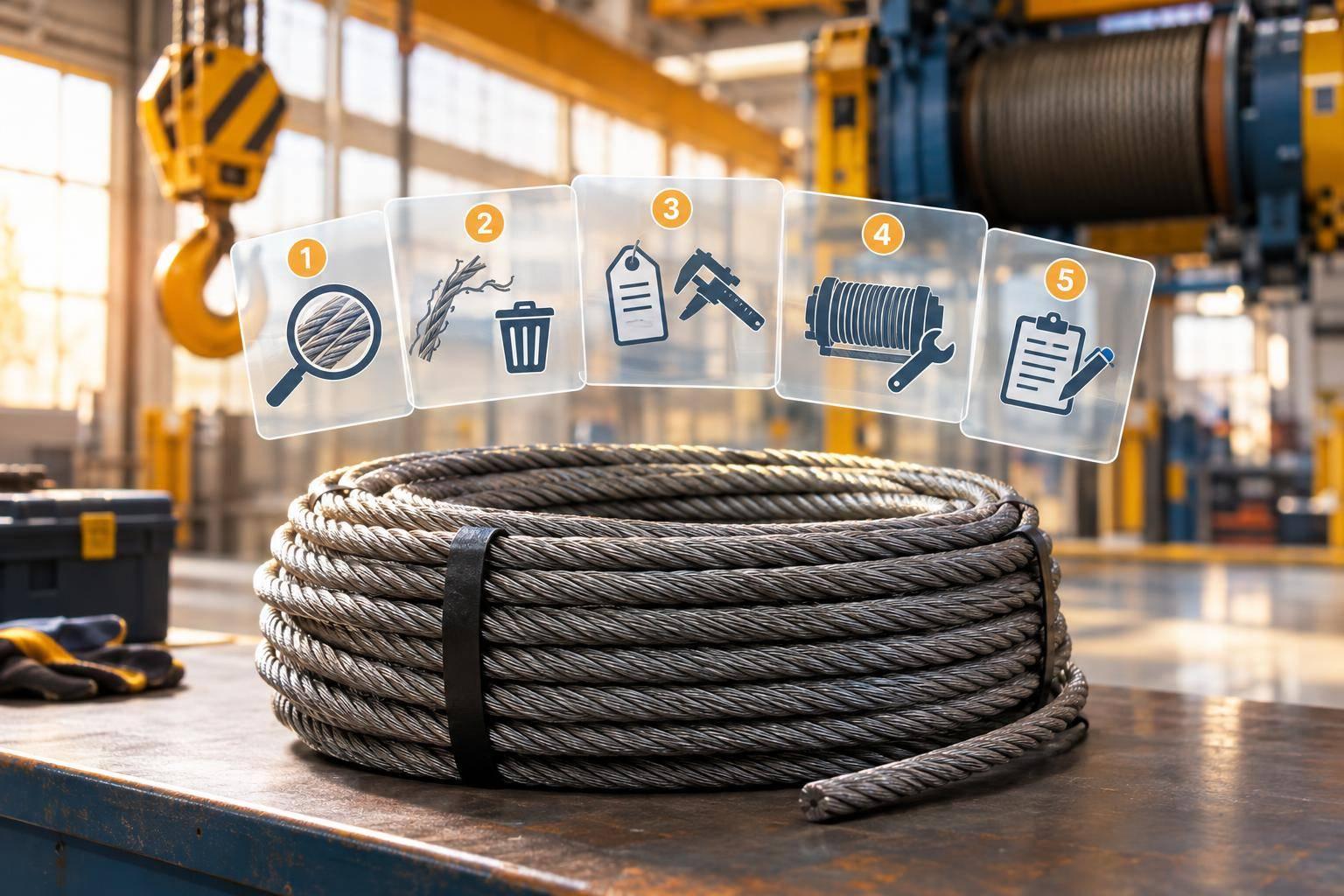
Step-by-step safety workflow for inspecting, discarding, selecting, installing, and documenting crane wire rope replacements.
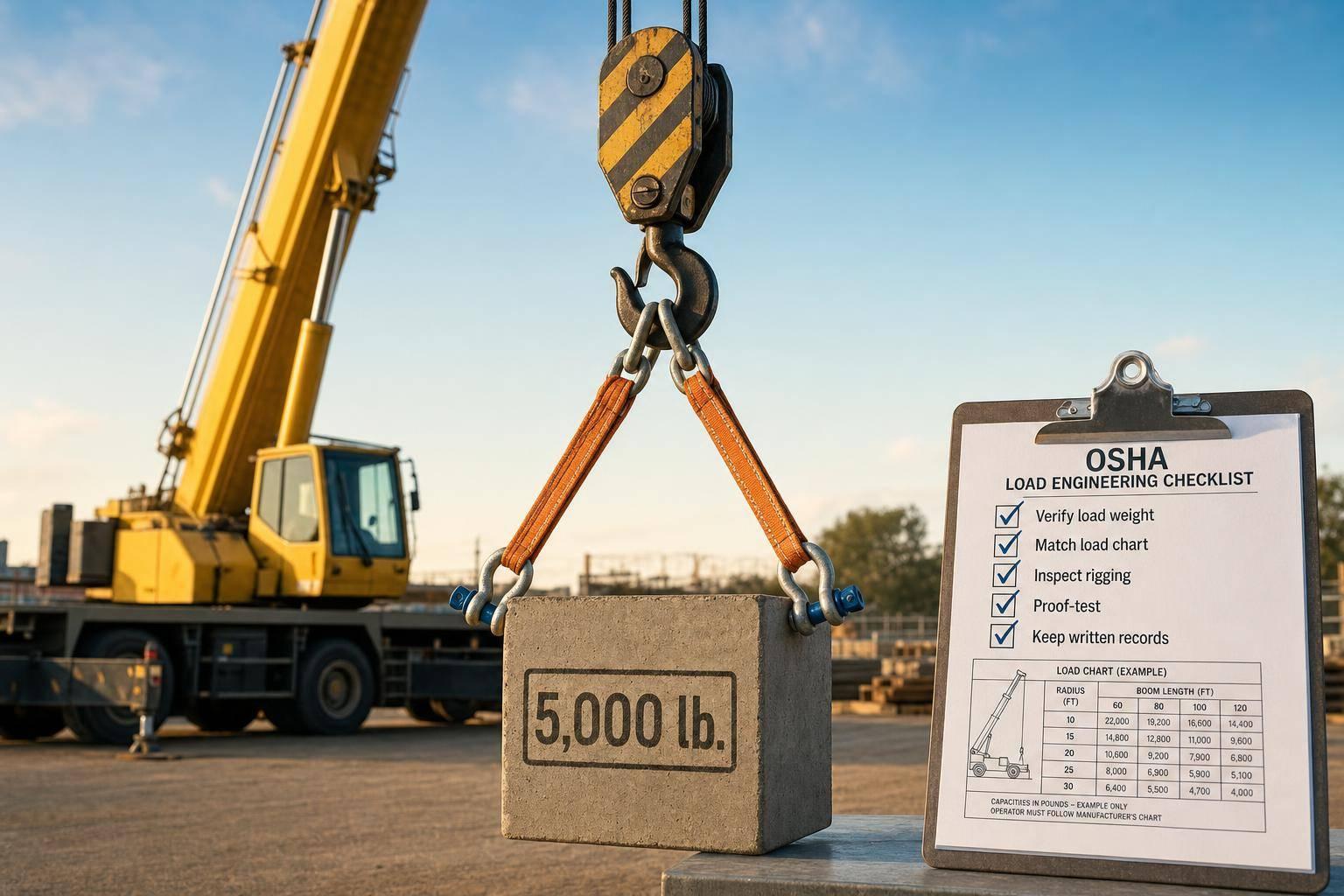
OSHA Standards for Load Engineering Compliance
Verify load weights, match load charts to exact crane setup, inspect rigging, proof-test, and keep written OSHA records.