
Troubleshooting Overhead Crane Electrical Problems
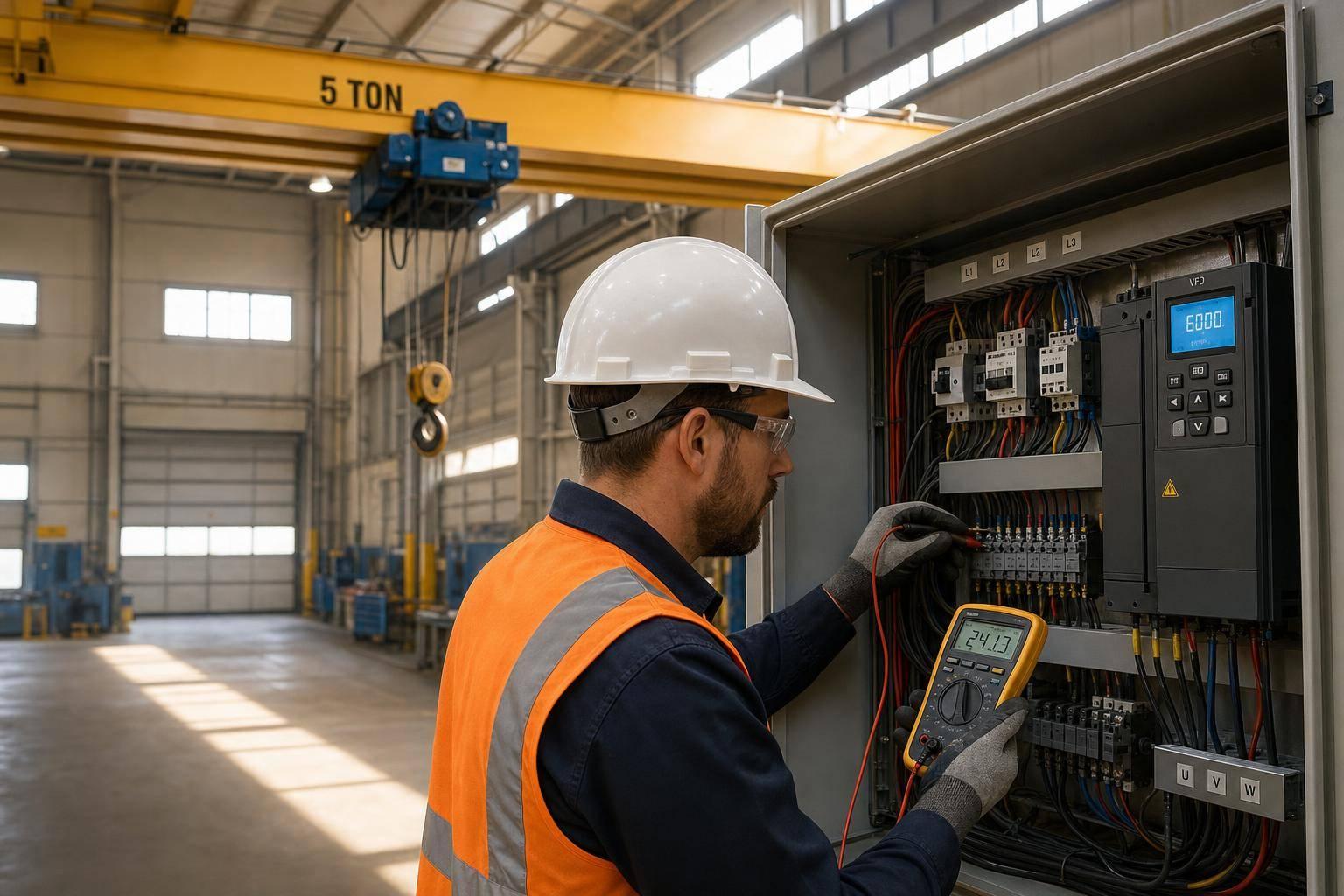
If an overhead crane stops, I start at the power source and work one step at a time until the fault shows up. In many U.S. plants, that means checking a 480 V three-phase system, locking out every energy source, and verifying zero voltage before I touch the panel.
Here’s the short version of the process:
- Lock out and tag out the crane
- Verify zero energy on the line side, load side, and control circuits
- Check for heat marks, moisture, corrosion, or burnt parts
- Test incoming power, disconnects, fuses, and breakers
- Confirm control power, E-stops, and limit switches
- Trace the problem to the failed part: contactor, brake, motor, or VFD
- After the repair, test the crane again and log readings, fault codes, replaced parts, and the service date in MM/DD/YYYY format
A lot of crane electrical faults come down to a short list of causes: lost phase, blown fuse, bad wiring connection, failed contactor, tripped VFD, or a stop circuit issue. For example, single phasing can overheat a motor fast, and repeated fuse failures often point to a short or ground fault, not bad luck.
If I had to sum up the article in four steps, it would be this:
- Start with safety
- Follow power from supply to load
- Test the failed point before replacing parts
- Verify the repair before putting the crane back in service
This gives you a clear path to find why a crane won’t power up, why one motion won’t run, or why motors, fuses, or VFDs keep failing.
Overhead Crane Troubleshooting (Review)
sbb-itb-6be7c12
2. Safety Checks Before Any Electrical Testing
Before you open any panel, make sure the crane is isolated and verify zero voltage. After you confirm zero energy, open the panel and do a visual check before any testing starts.
Lockout/Tagout and Zero-Energy Verification
Shut down the crane, then lock out and tag out every energy source. After that, verify zero voltage at the:
- line side
- load side
- control circuits
This step matters because a crane can still hold live power even after shutdown. You want proof, not guesses.
What to Look for Before Opening Panels
Check for damage, overheating, or moisture before opening the panel. Burn marks, a hot smell, condensation, or corrosion are all signs to stop.
If you find an unsafe condition, do not continue.
When to Call a Qualified Crane Technician
Stop and call a qualified crane technician if the issue involves VFD programming or severe wiring damage. TDS Erectors & Crane Service serves the 4-state region for crane service and repairs.
With safety verified, move next to incoming power, fuses, and disconnects.
3. A Step-by-Step Diagnostic Process for Crane Electrical Faults
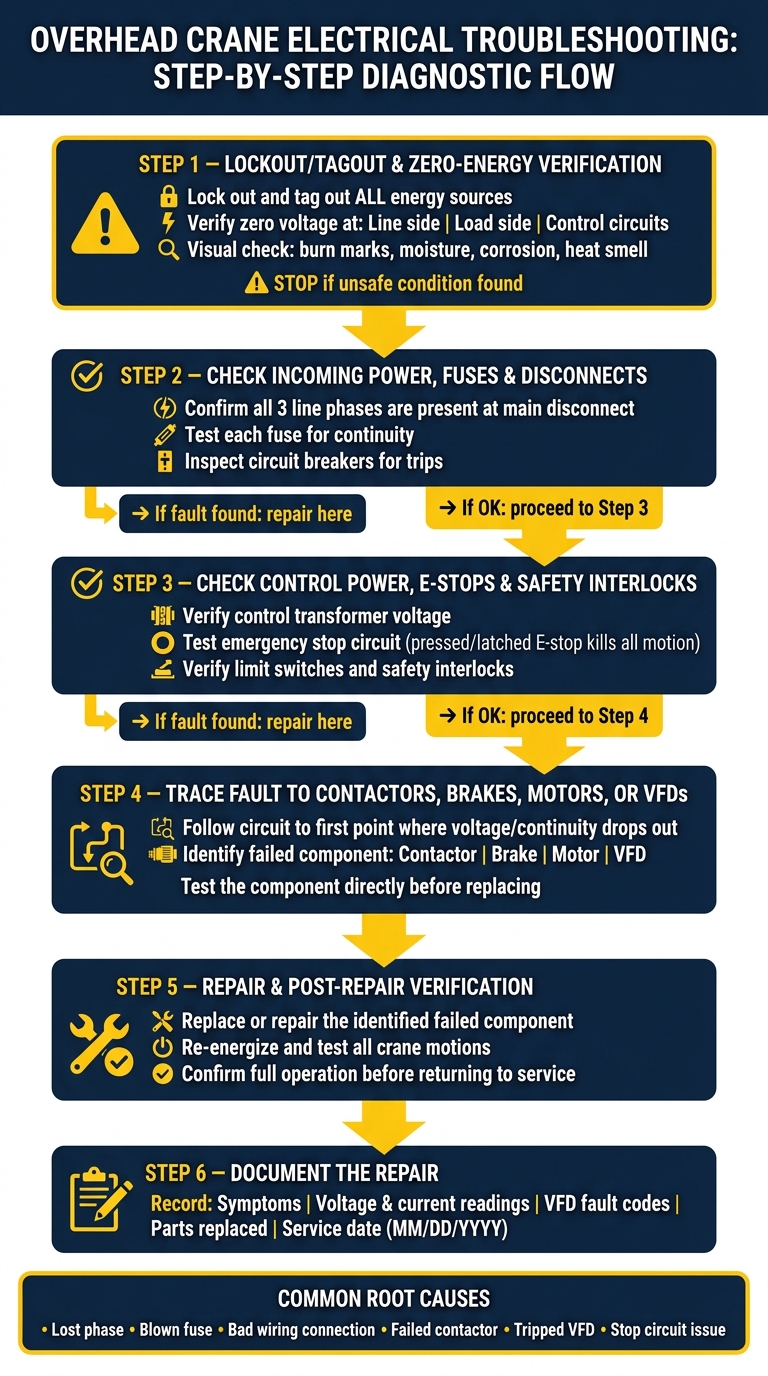
Overhead Crane Electrical Troubleshooting: Step-by-Step Diagnostic Flow
Start at the power source and move outward, one circuit at a time. Trace the fault from incoming power through the control circuit to the contactor, brake, motor, or VFD. Once you narrow the issue to a single circuit, match the symptom to the part that most likely failed.
Start With Incoming Power, Fuses, and Disconnects
Begin at the main disconnect. Check that all three line phases are present before you move to any internal parts. Then test each fuse for continuity and inspect the circuit breakers to make sure none have tripped.
Check Control Power, E-Stops, and Safety Interlocks
If main power looks good, move to the control side. Check the control transformer and confirm control voltage is present. Next, test the emergency stop circuit. A pressed or latched E-stop will shut down all motion even when main power is available. Then verify the safety interlocks, including limit switches.
Trace the Fault to Contactors, Brakes, Motors, or VFDs
Once you’ve confirmed incoming power and the control circuit, follow the fault through the rest of the system. Find the first point where the circuit stops responding. In plain terms, stop at the spot where voltage, continuity, or response drops out. That tells you where the problem sits: the power side, the control side, or the load.
4. How to Diagnose Common Overhead Crane Electrical Problems
After you isolate the fault in the main diagnostic flow, use the symptom to narrow your search. That gives you a shorter path to the bad part instead of chasing the whole system.
Crane Will Not Power Up or Loses Power Intermittently
If the crane will not energize, start with the basics: the main disconnect, fuses, and panel breakers.
If power drops out on and off, inspect the electrification path. Worn conductor bars, damaged festoon wiring, and loose terminals are common causes. Power issues like this can feel random, but they usually come from a weak link somewhere along that path.
If main power is present, move to the specific motion that will not run.
Crane Has Power but One or More Motions Will Not Run
Sometimes the crane has power, but one motion, such as the hoist, trolley, or bridge, still will not run. In that case, check the affected motion's control circuit first. Then trace the problem to its contactor, brake, limit switch, or motor.
A good rule here is simple: follow the control circuit from the operator input to the load device. Start at the command, then keep moving step by step until the signal disappears.
Motors Overheat, Fuses Blow, or VFDs Trip Repeatedly
When the same fault keeps coming back, the cause is usually still active in the circuit. You're not looking at a one-time glitch. Something is still wrong and needs to be found.
For motor overheating, common causes include:
- Single phasing
- Undervoltage
- Overloading the crane
- Excessive jogging
Check all three phases at the motor terminals, and confirm the voltage matches the motor nameplate.
For repeated VFD trips, check overloads, phase loss, motor cable faults, brake issues, and cooling problems.
If fuses keep blowing, that usually points to a short, a ground fault, or a failing component. Match the symptom to the first failed point in the circuit, then test that component directly.
5. Preventive Maintenance and Post-Repair Checklist
After you fix the fault, go back through the same checkpoints to help stop it from happening again.
Routine Electrical Inspections That Prevent Repeat Failures
Routine inspections help catch small problems before they turn into downtime. And the places you inspect should look familiar - they’re the same trouble spots you checked during diagnosis.
Inspect panels, terminals, grounding, conductor bars, festoon systems, contactors, brake circuits, motor insulation condition, and enclosure cleanliness. Watch for wear, dirt, loose connections, heat marks, or damage before they turn into the same fault all over again.
What to Record After Each Repair or Test
Document every repair. Good records make the next service call a lot easier.
After each service event, record:
- The symptoms seen before the repair
- Voltage and current readings taken during testing
- Any VFD fault codes retrieved
- Parts replaced
- The service date in MM/DD/YYYY format
These are the same points checked during diagnosis, so your service log shows what failed, what was tested, and what changed.
Key Takeaways for Safe and Efficient Troubleshooting
Close every repair by confirming the fix and logging the results. The process stays the same each time: keep safety controls in place during testing, trace the circuit from supply to load, test the component directly before replacing it, and verify the repair before putting the crane back into service.
Put simply:
- Start with safety
- Trace the circuit
- Test the failed component
- Verify the repair
Preventive maintenance helps make troubleshooting less common. When inspections happen on schedule and records are kept accurately, electrical faults can show up as early warning signs instead of emergency shutdowns.
If a fault goes beyond what your team can safely diagnose in-house, contact TDS Erectors & Crane Service.
FAQs
What tools do I need to troubleshoot crane electrical faults?
Start with safety and a systematic inspection. Begin with a visual check for loose wiring, corrosion, or damaged parts. Make sure emergency cut-off switches and safety interlocks work as they should and are easy to reach.
Use diagnostic tools to verify that the control system is working properly and that grounding is secure. TDS Erectors & Crane Service stresses regular inspections and upkeep to catch problems before they lead to downtime.
How can I tell if the problem is in the control circuit or the motor?
Start with a visual and functional inspection. If you spot moisture, corrosion, or loose wiring in control cabinets and junction boxes, the issue often traces back to the control circuit.
Grinding or popping sounds can point to a motor problem or another mechanical fault. Delays in control response, unusual smells, or safety interlocks and limit switches that don’t respond as they should usually signal a control system issue. TDS Erectors & Crane Service recommends having any unusual behavior checked right away by a qualified technician.
When should I stop troubleshooting and call a qualified technician?
Stop troubleshooting and call a qualified technician right away if you notice unusual noises, strange odors, delayed controls, an overload event, suspected structural damage, or storm-related exposure like lightning or extreme wind.
A person with the right hands-on knowledge can take care of routine inspections and small adjustments. But for complex work, post-repair inspections, yearly assessments, and signing off that the crane is safe to return to service, you need a qualified person.
Related Blog Posts
Blogs, calculators, and other content on the TDS blog is for educational purposes only and does not constitute crane or rigging advice. For information specific to your situation, please contact us for an estimate or consultation.
Related Articles
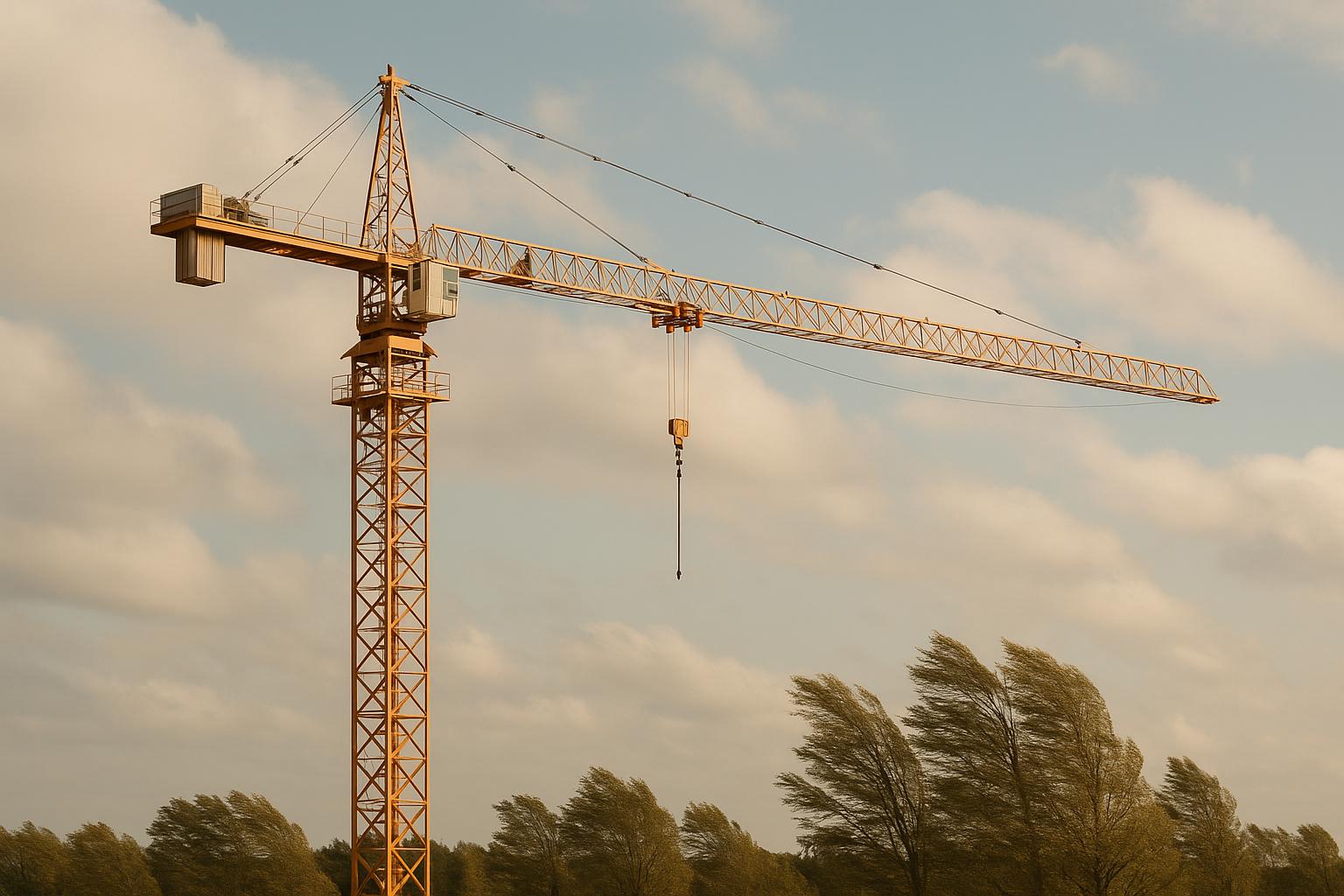
Wind Speed Limits for Crane Operations
Wind thresholds, measurement tips, and manufacturer-based stop-work rules to keep crane lifts safe in gusty conditions.
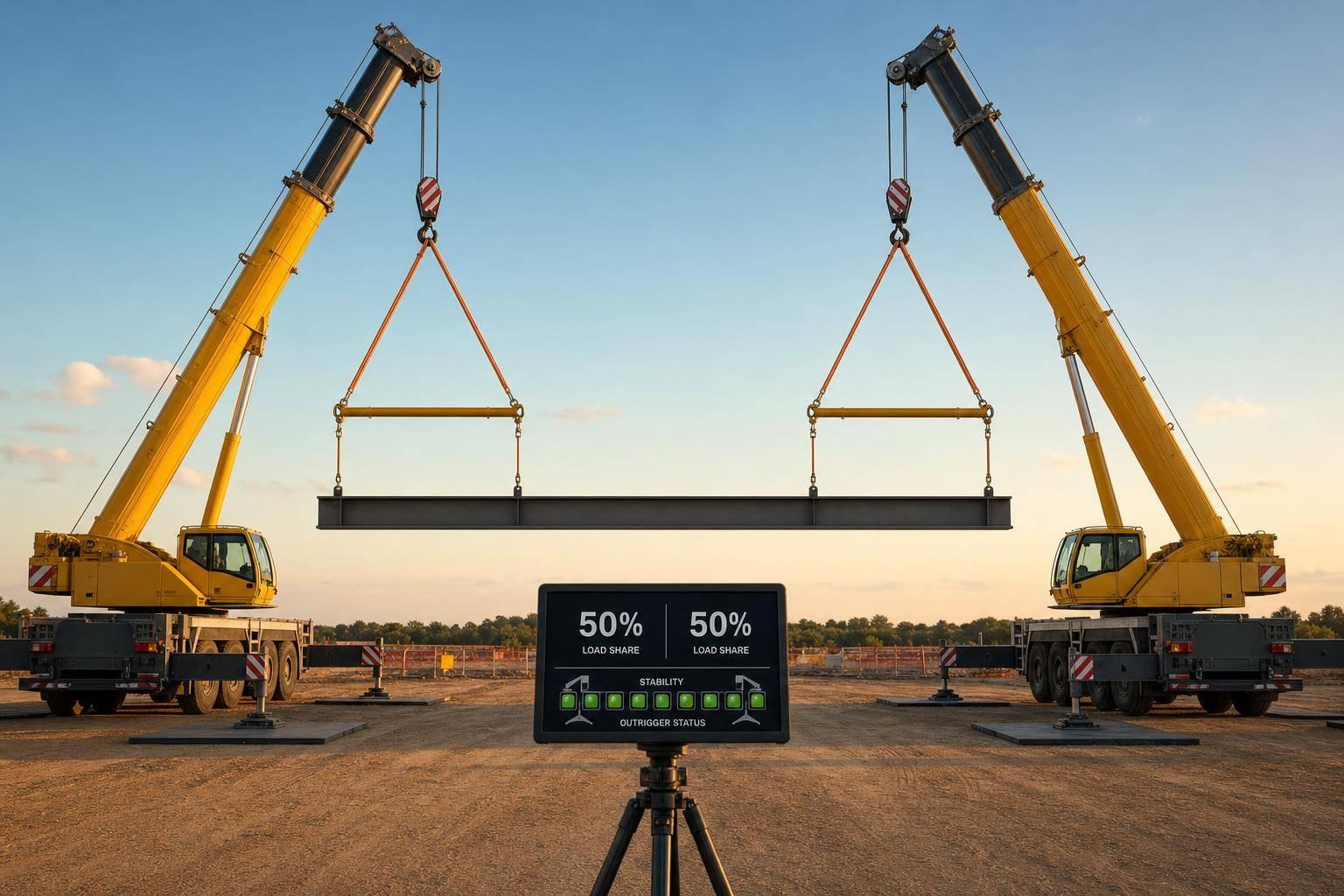
Study: Load Stability in Multi-Crane Lifting Operations
Multi-crane lifts fail when planned load share drifts—maintain accurate geometry, matched rigging, synchronized moves, and live hook/outrigger monitoring.

What Does OSHA Require for Crane Operators?
Learn about OSHA's requirements for crane operators, including certification, training, inspections, and documentation to ensure workplace safety.