
Wind Speed Limits for Crane Operations
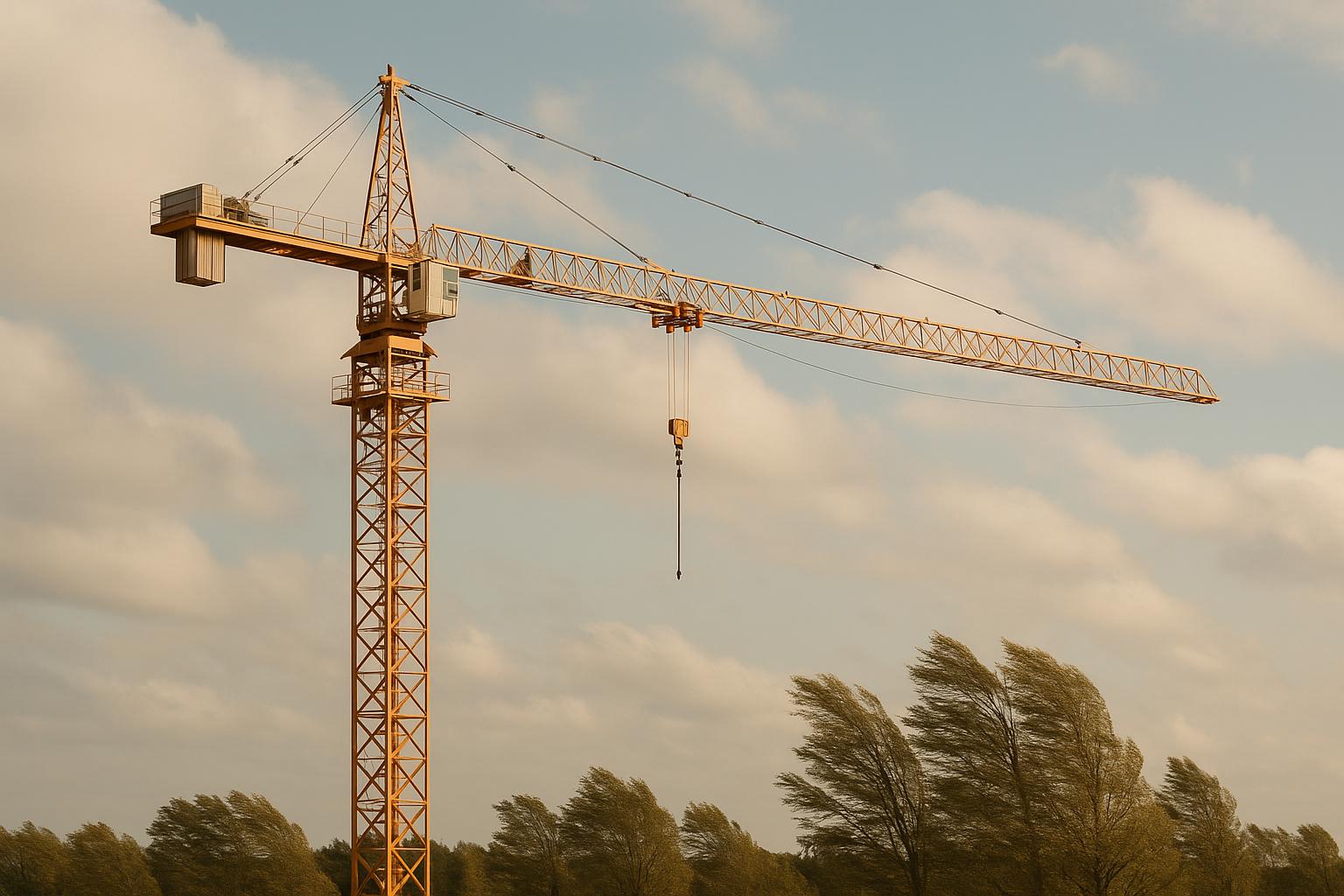
Crane safety depends heavily on monitoring wind conditions. Wind impacts crane stability, load control, and structural integrity, making it essential to follow strict wind speed limits. Here's what you need to know:
- General Wind Limits: Most crane operations pause around 20–25 mph sustained winds, with complete shutdowns at 38–45 mph depending on crane type.
- Gusts vs. Sustained Winds: Gusts (short bursts of higher wind speeds) are more dangerous than sustained winds. Many sites enforce stricter limits for gusts, such as halting operations when gusts exceed 30–35 mph.
- Crane-Specific Limits: Mobile cranes typically stop at 20–22 mph, crawler cranes at 26–27 mph, and tower cranes at 38–45 mph. Loads with large surface areas require even stricter thresholds.
- Manufacturer Guidelines: Always follow the crane manufacturer’s wind speed ratings as they are legally binding. Adjust limits based on site conditions and load characteristics.
Key Takeaway: Monitoring wind speeds with tools like anemometers and adhering to manufacturer and site-specific limits ensures safer crane operations. Always document thresholds, train teams, and pause lifts when conditions become unsafe.
Wind speed calculation for Lifting Operations
How Wind Affects Crane Operations
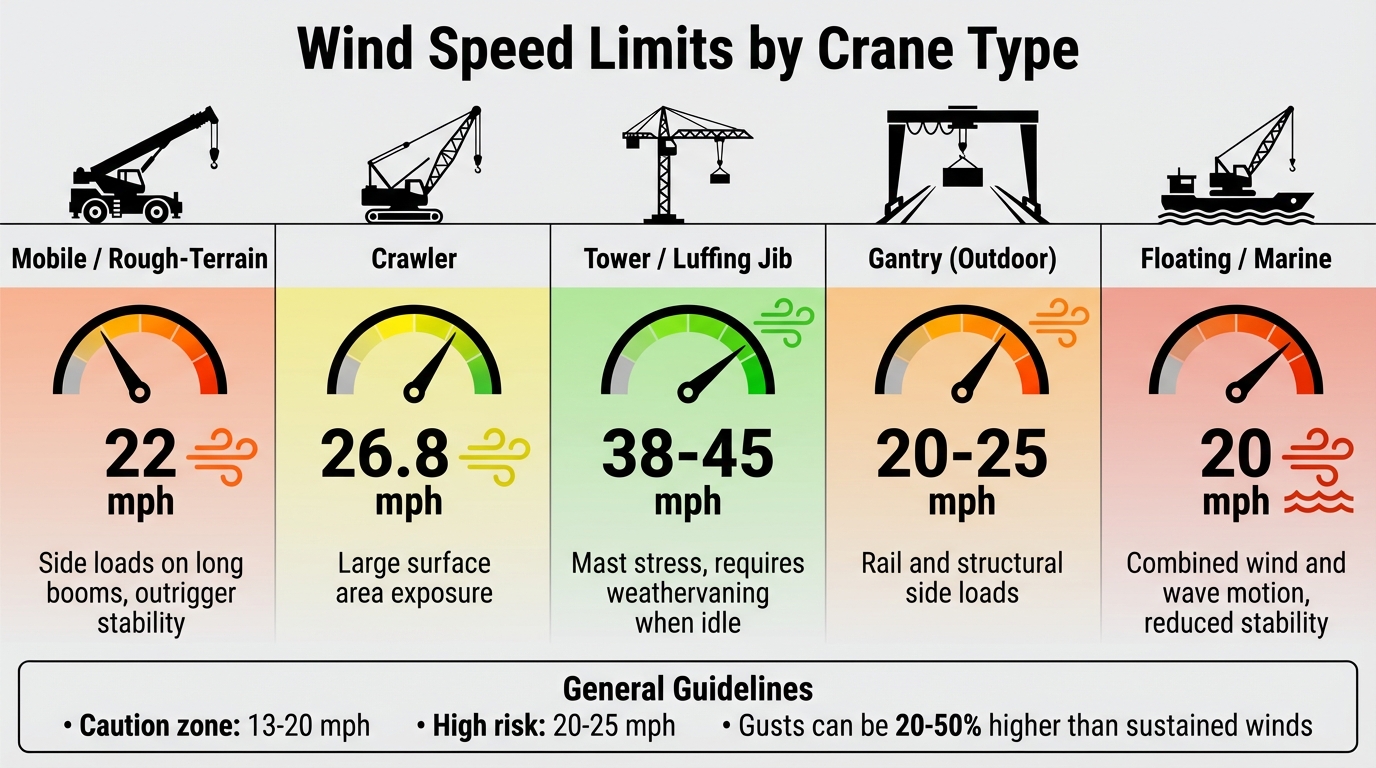
Wind Speed Limits by Crane Type: Operational Safety Thresholds
Sustained Winds vs. Wind Gusts: What's the Difference
Sustained winds are measured over a span of 1–2 minutes and give an average wind speed, while gusts are short, intense bursts lasting 3–5 seconds that can be 20–50% higher than the sustained average. This distinction matters because a crane that operates safely in 18 mph sustained winds could encounter unsafe conditions if gusts spike to 30–35 mph. Many safety protocols prioritize the maximum gust speed over sustained wind speeds. For example, some guidelines permit operations at 25 mph sustained winds, provided gusts remain under 35 mph. Operators must closely monitor gusts in real time when making lifting decisions. Grasping this difference is essential for understanding how wind impacts crane components and loads.
Wind Effects on Crane Components and Loads
Wind significantly affects crane parts and the stability of lifts. It can cause load sway, particularly with flat or expansive loads, leading to increased line angles and lateral forces on the boom and rigging. Once a load starts swinging, it can take several cycles to stabilize, making precise placement difficult and increasing the chances of collisions with structures or power lines. Long or flat loads, like beams or prefabricated panels, are especially vulnerable to uncontrolled rotation when wind hits their broadside, creating drag and emphasizing the need for tag lines.
The "sail effect" is another challenge, where wind catches a load's large surface area, potentially generating forces beyond the crane's capacity. For instance, a 500 lb sign panel in 20 mph winds can pose more risk than a compact 5,000 lb machinery lift because drag increases with surface area. Wind speeds also intensify with height - at 150–200 ft, winds can be 1.5–2 times stronger than at ground level, making conditions that seem safe at the base potentially hazardous at hook height.
Wind also puts structural stress on crane components. The boom and jib endure side loading and bending forces that, if excessive, can lead to buckling or other structural damage. Tower cranes, often exposed to strong crosswinds, are designed to "weathervane" or free slew when idle, aligning with the wind to reduce stress on the mast. The slewing ring and upper structure can experience torque spikes, which accelerate wear and tear. At the base, wind increases overturning forces on outriggers and the main structure, raising the risk of tipping if proper support isn't in place.
Different crane types handle wind differently. Mobile truck cranes and rough-terrain cranes are particularly sensitive to side loads from long booms. Operators are often advised to reassess operations above 20–22 mph and stop lifts when winds reach 20–30+ mph. Crawler cranes, while benefiting from a stable base, still require caution when winds hit the mid-20 mph range. Tower cranes and luffing jib cranes are built to withstand higher wind speeds, with operations usually halting around 38–45 mph. Outdoor gantry cranes and floating/marine cranes, however, typically suspend operations at 20–25 mph due to concerns over rail loads and, in marine environments, the combined effects of wind and wave motion.
| Crane Type | Typical Operational Wind Limit (mph) | Key Vulnerability |
|---|---|---|
| Mobile / Rough-Terrain | 22 | Side loads on long booms, outrigger stability |
| Crawler | 26.8 | Large surface area exposure |
| Tower / Luffing Jib | 38–45 | Mast stress, requires weathervaning when idle |
| Gantry (Outdoor) | 20–25 | Rail and structural side loads |
| Floating / Marine | 20 | Combined wind and wave motion, reduced stability |
Recognizing these wind effects allows supervisors and operators to make informed decisions, such as when to derate the crane, modify lift plans, or suspend operations before reaching critical wind thresholds.
How to Determine Safe Wind Speed Limits for Your Crane
Check Manufacturer Guidelines and Regulatory Standards
Start by consulting the crane's operator manual. This is your go-to resource for understanding the maximum wind speeds allowed during operation, the wind limits for when the crane is out of service, and any adjustments to capacity based on specific wind conditions. It also provides details like the height at which wind measurements should be taken and how factors like boom length, jib configuration, or attachments might influence wind limits. Essentially, the manual lays the groundwork for safe operation.
Translate these guidelines into straightforward rules for your team. For instance, the manual might specify: "Normal lifts allowed up to 18 mph, caution between 18–22 mph, and stop at 22 mph for this crane and configuration." Make these limits visible - post them in the crane cab, include them in lift plans, and document them in the job hazard analysis.
While OSHA mandates that manufacturers' instructions must be followed, it doesn’t set a universal wind speed limit. This means it's up to employers to determine when wind conditions make operations unsafe. In practice, many U.S. safety protocols advise reassessing lifts at around 20 mph and halting operations between 20–25 mph unless the manufacturer specifies otherwise. If project or owner policies impose stricter limits than the manual, those stricter limits should be adopted and documented.
Evaluate Crane Type, Load, and Site Conditions
Once you’ve reviewed the manufacturer’s guidelines, assess the specific conditions at your site. Different cranes have varying tolerances for wind. For example:
- Mobile and telescopic boom cranes often limit operations to 20–25 mph.
- Tower or luffing-jib cranes may allow lifts at 38–45 mph before needing to shut down.
- Crawler cranes typically set limits around 26–27 mph.
- Floating or marine cranes often require lower thresholds, around 20 mph, due to platform movement.
Each crane type and configuration should have its own wind table, tailored to the specific conditions and in line with the manufacturer’s recommendations.
Wind impacts the sail area of a load more than its weight. Large, flat, or lightweight components can become unmanageable even within the crane's rated wind limits. When handling loads with significant sail area, reduce the operational wind limit by 5–10 mph below the crane's maximum to maintain control and avoid excessive side loads. On the other hand, compact, heavy loads can often be lifted closer to the published wind limit, while light or bulky items may require operations to stop when winds reach 15–20 mph.
Keep in mind that wind speeds increase with height, which can make elevated lifts more challenging. Open or exposed sites, such as coastal areas, ridges, or large open spaces, tend to experience stronger and more turbulent winds. Even urban locations can have unique challenges, like wind funneling between buildings that creates sudden gusts. For these reasons, use more conservative limits for exposed or elevated lifts, factor in local wind patterns, and position the crane to minimize crosswinds during critical operations.
Set and Document Wind Speed Thresholds
Once you’ve gathered all the necessary information, establish clear wind speed thresholds for safe operations. Create a table for each crane that categorizes thresholds into three zones:
- Normal: Up to 15–18 mph
- Caution: 15–20 mph (or 15–25 mph, depending on conditions)
- Stop Work: The maximum wind speed specified by the manufacturer
Adjust these thresholds downward as needed based on site conditions, load characteristics, or company policies. Document these limits in lift plans, job hazard analyses, crane postings, and daily pre-lift briefings. Be clear about whether these thresholds are based on sustained wind speeds, averages over a set period (e.g., 10 minutes), or peak gusts. Many safety protocols treat gusts that exceed sustained limits by 5–10 mph as a reason to pause or stop work.
At caution levels, pause nonessential lifts and reevaluate critical ones. You might need to reduce the lifting radius, lower the boom height, or delay operations involving loads with high sail areas. If winds hit or exceed the stop-work limit, operators must immediately halt lifting, secure the load, return the crane to its out-of-service condition, and document the stoppage according to company protocols. Before resuming, confirm that wind speeds are below the restart threshold, inspect the crane and rigging, and update the crew on any changes to the limits.
For additional support, professional crane services like TDS Erectors & Crane Service can provide OSHA-certified operators and help develop site-specific wind procedures. They can assist with interpreting manuals, creating lift plans, and factoring in local weather and site constraints. This level of expertise is especially helpful for projects involving high-sail-area loads, infrequent crane use, or multiple cranes operating under varying wind conditions. If you're working in regions like the U.S. 4-state area, TDS Erectors & Crane Service can be a valuable partner in ensuring safe and efficient crane operations.
sbb-itb-6be7c12
Monitoring and Managing Wind Conditions on Site
Tools for Measuring Wind Speed
When it comes to keeping an eye on wind conditions during crane operations, crane-mounted anemometers are the go-to tool. These devices, typically installed on the boom or jib, measure wind speeds right at the operating height. Many modern systems even integrate with crane controls, triggering alarms when wind speeds hit specific thresholds - often around 20 mph.
For on-the-ground checks, handheld digital anemometers are a practical option. These portable tools can measure wind speeds up to 100 mph and are budget-friendly, but they do have limitations. Since they only capture ground-level readings, they might not reflect stronger winds higher up near the boom. For a broader view, portable weather stations step in by tracking sustained winds, gusts, and wind direction across the site. Combining these tools provides a more complete understanding of wind conditions, which is critical for making informed safety decisions.
How to Interpret Wind Readings
Wind data typically comes in two forms: sustained winds and gusts. Sustained winds represent the average speed over a period of one to ten minutes, while gusts are short-lived peaks that can be 20–50% higher than the sustained speed. Gusts are especially important because they have a greater impact on crane stability and load movement, making them a key factor when evaluating safety.
For mobile and telescopic cranes, wind speeds are categorized as follows:
- Calm: 0–12 mph
- Cautionary: 13–20 mph
- High Risk: 20–25 mph (operations should stop)
When winds exceed 32 mph, lifting activities should be completely shut down. Tower cranes, on the other hand, are designed to handle stronger winds, with safe operating limits usually between 38–45 mph sustained. Operators should prepare to stop work once winds approach 80% of these limits. If there’s any uncertainty about safety, lowering the load immediately is the safest move. When critical wind levels are reached, specific response steps should follow.
What to Do When Wind Speeds Increase
Once wind speeds near or exceed safe limits, immediate adjustments are necessary. Start by reducing the lifting radius or lowering the boom height to reduce wind exposure. If conditions worsen, lower the load to the ground and secure it. For tower cranes, activating weather-vane mode - which allows the crane to rotate freely - can help manage stress on the structure. This mode is typically used when winds exceed 38 mph.
If wind speeds reach stop-work thresholds (around 20–25 mph for mobile cranes or gusts near 35 mph), halt all operations immediately and secure the crane. In severe cases, it may be necessary to evacuate the area for safety.
Every wind-related stoppage should be documented. Record the time, wind speed, and actions taken. Before resuming work, confirm that wind speeds have stayed below safe levels - usually sustained below 12 mph for at least 30 minutes. Additionally, inspect the crane and rigging for any damage and ensure the crew is briefed on the latest conditions.
Proper wind monitoring and management are non-negotiable for crane safety. Companies like TDS Erectors & Crane Service employ OSHA-certified operators trained to handle these challenges, ensuring safer operations across the region.
Integrating Wind Speed Limits into Safety Procedures
Including Wind Limits in Lift Plans
Every lift plan should include maximum sustained wind speeds and gust thresholds based on the manufacturer's guidelines and site-specific conditions. Assign responsibility for wind monitoring - whether it’s the operator, signal person, or site supervisor - and clearly outline how often wind readings need to be taken. To ensure accuracy, place anemometers at load height to capture the most relevant data.
During pre-job safety briefings, emphasize these wind limits with the team. Highlight that wind speeds at higher elevations can be much stronger than at ground level. Establish clear go/no-go criteria tied to real-time wind data. For example:
"If gusts exceed 18 mph at load height during the lift, immediately lower the load and suspend operations until wind speeds drop and remain stable for at least 15 minutes."
Additionally, outline communication protocols for when wind conditions approach these thresholds. Include details on how stop-work decisions are made, who has the authority to make them, and how they are documented.
Adjusting Procedures for Different Crane Types
Wind thresholds vary by crane type, so procedures need to account for each crane's specific limitations. For example:
- Mobile cranes: Typically stop operations at sustained wind speeds of 20–22 mph. Procedures should include early derating, such as reducing load capacity to 75% when winds are between 11–20 mph, and limiting boom extension in marginal conditions.
- Tower cranes: These generally halt at 38–45 mph. Include instructions on when to cease lifting and how to secure the crane by allowing the jib to weather-vane when idle.
- Crawler cranes: Operations usually stop around 26–27 mph. Guidelines should restrict work at larger radii in rising winds and avoid lifting loads with large sail areas near the threshold.
For loads with significant sail areas, adopt more conservative wind limits, often suspending operations at or below 20 mph, even if the crane's general limit is higher. Schedule these lifts during times of historically lower wind speeds, such as early mornings. Additionally, include provisions for extra tag lines and ensure experienced riggers are on hand.
Working with Professional Crane Services
Partnering with professional crane service providers can further enhance wind safety protocols. Companies like TDS Erectors & Crane Service bring OSHA-certified operators who are skilled at interpreting wind data and making real-time safety decisions.
"Safety is the number one priority at TDS Erectors & Crane Service. Our team is trained in all health and safety procedures relative to their job, including our office staff, repair and service team, and onsite operators. We ensure the best possible safety measures are in place for everyone and are always OSHA compliant." - TDS Erectors & Crane Service
Conclusion
Understanding wind's effects - ranging from consistent speeds to sudden gusts above 100 feet - is essential for ensuring safe crane operations. Establishing precise wind speed thresholds based on crane type is just as important. For instance, mobile cranes generally halt operations at 20–22 mph, crawler cranes at approximately 26.8 mph, and tower cranes between 38–45 mph. These limits are critical for avoiding risks like load sway, boom stress, and potential tip-overs.
However, these numbers only become meaningful when translated into actionable safety protocols. Incorporating wind speed limits into every lift plan ensures they are practical and enforceable. Using anemometers to monitor wind conditions at boom height allows operators to make informed decisions and stop work when necessary. Documenting specific thresholds for each crane type ensures decisions are data-driven rather than based on assumptions. For personnel lifts, California Title 8 mandates that a qualified person assess safety when wind speeds exceed 20 mph at the platform, reinforcing the importance of a cautious, well-documented approach.
Practical application is just as crucial as planning. When winds hit 20 mph, even routine lifts with large, bulky loads can become risky. At 40 mph, all operations should cease, with booms either lowered or secured. Adjustments in lifting capacity between 20 and 39 mph, depending on crane type and boom length, highlight the need for adaptability and constant awareness in the field.
Teaming up with professional crane services can further enhance your wind safety measures. TDS Erectors & Crane Service, for example, integrates OSHA-certified expertise into every lift plan, ensuring wind assessments align with manufacturer guidelines and regulatory standards. Their approach minimizes risks, even in the most complex lifting operations.
Wind speed thresholds are not just numbers; they are pivotal safety checkpoints that protect your team, equipment, and project timelines. By combining manufacturer specifications, real-time monitoring, clear stop-work policies, and expert guidance, you can create a crane operation where safety and efficiency go hand in hand. These strategies work together to safeguard your crew, preserve your equipment, and keep your project on track.
FAQs
What are the recommended wind speed limits for crane operations?
Crane operations are heavily influenced by wind conditions, with safety guidelines varying depending on the type of crane and the manufacturer's recommendations. While OSHA generally recommends stopping operations when wind speeds surpass 20 mph, the exact threshold can differ depending on the specific equipment and circumstances. To ensure safety, always refer to the crane's load chart and the manufacturer's instructions before proceeding.
What’s the difference between wind gusts and sustained winds when operating a crane?
Wind gusts are brief, sudden bursts of stronger wind that can pose unexpected challenges during crane operations. These sharp increases in speed can momentarily push conditions beyond safe limits, heightening the risk of instability or accidents. On the other hand, sustained winds maintain a steady speed over time, making them more predictable and manageable.
While both types of wind demand attention, gusts call for extra caution because of their unpredictable behavior. To ensure safety, it's essential to use accurate tools to monitor wind conditions and adjust operations accordingly.
What are the best tools for monitoring wind conditions during crane operations?
When working with cranes, keeping an eye on the wind is crucial. That’s where anemometers and wind vanes come in. Anemometers are designed to measure wind speed accurately, while wind vanes indicate the direction of the wind. Together, these tools provide the insights needed to decide whether it’s safe to operate cranes under changing weather conditions.
By consistently checking wind conditions with these devices, you can reduce the risk of accidents and stay aligned with safety regulations. Reliable readings are key to creating and maintaining a safe workspace.
Related Blog Posts
Blogs, calculators, and other content on the TDS blog is for educational purposes only and does not constitute crane or rigging advice. For information specific to your situation, please contact us for an estimate or consultation.
Related Articles
Steel Weight Calculator
Calculate steel weight fast for bars, plate, pipe, tube, and more. Get per-piece and total weights in lb and kg with clear unit handling.

Root Causes of Weld Failures: Analysis Guide
Systematic guide to diagnosing weld failures: defects, root causes, NDT methods, documentation, and prevention tips.
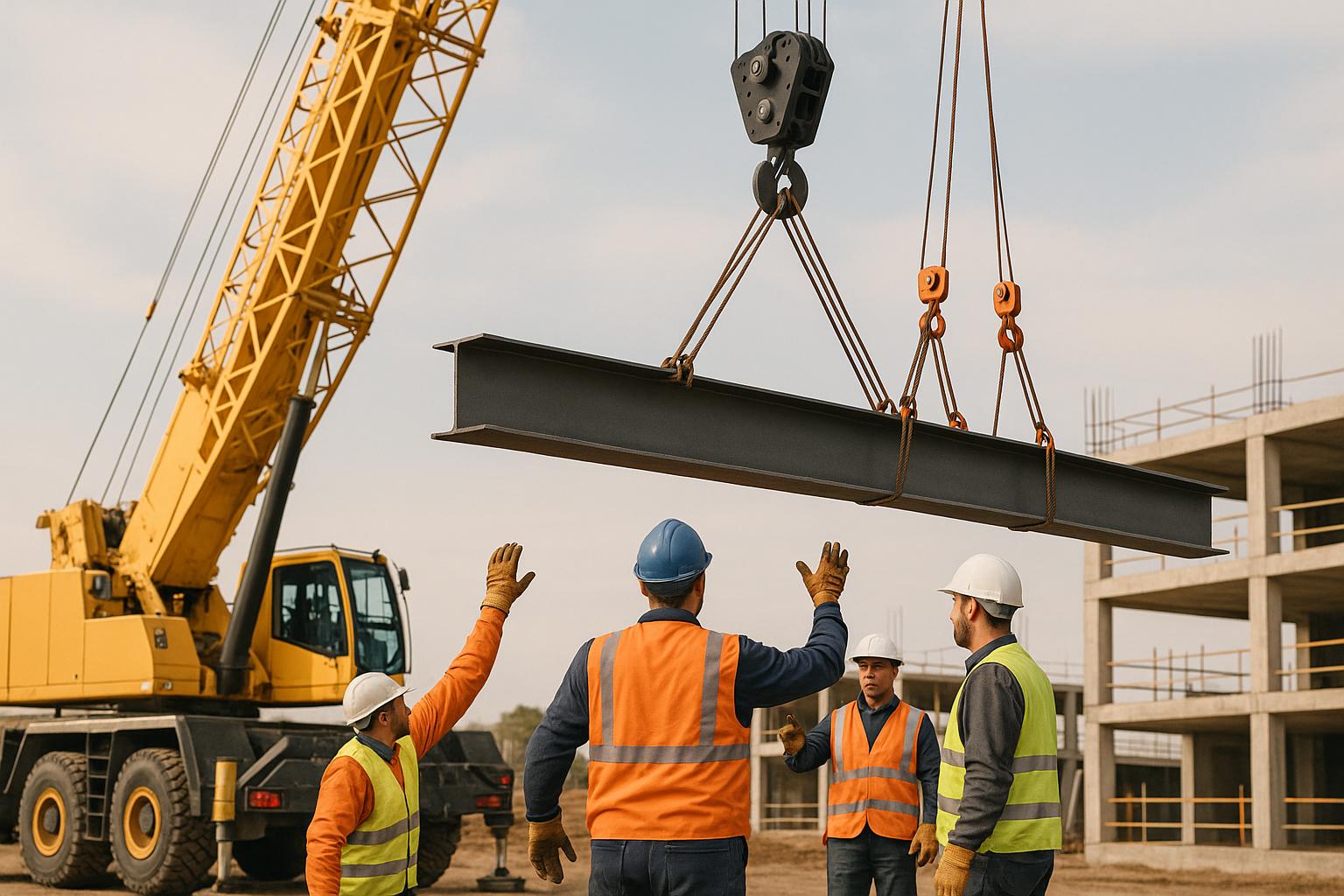
Solving Common Crane Rigging Problems Fast
Explore essential strategies for addressing common crane rigging challenges, ensuring safety, efficiency, and compliance on construction sites.